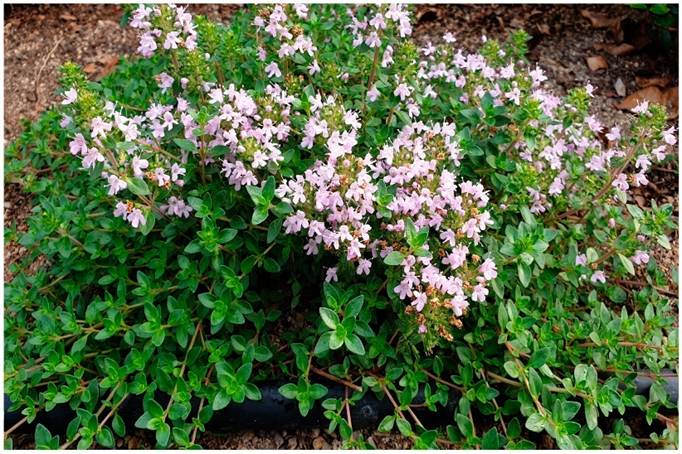
• Figure 1. A fully grown Thyme plant with flowers (Kim et al., 2022).

    Thyme (Thymus vulgaris), commonly known as garden thyme, is a small, bushy, and evergreen perennial herb (Figure 1) of the mint family, Lamiaceae. Native to the Mediterranean region, this plant exhibits either an upright or creeping growth habit, depending on the species (Hammoudi et al., 2022). Thyme has been widely used since ancient times due to its numerous health benefits, which are attributed to the rich concentration of bioactive compounds in its dried leaves, flowering tops, and essential oils (Hammoudi et al., 2022). In addition, it serves as a culinary ingredient to flavour meats such as boar, lamb, and rabbit, as well as in liqueurs and cheese. As one of the most significant medicinal aromatic plants, thyme’s economic importance is largely derived from its essential oils, which are extensively used in the food and pharmaceutical industries (Nieto, 2020). The major components of thyme oil include thymol, p-cymene, γ-terpinene, and linalool (Table 1).

    Table 1. Major biochemical components in the leaves of Thymus vulgaris.

    Compounds Quantity (%)
    Thymol23-60
    p-Cymene8-44
    γ-Terpinene18-50
    Linalool3-4
    Carvacrol2-8
    β-Caryophyllene3.1
    α-Pinene1.9
    Terpinen-4-ol1.3

    Source: Adapted from Satyal et al. (2016); Nieto (2020); and Hammoudi et al. (2022).

    Thymus vulgaris has been used since time immemorial as a traditional herbal remedy to treat conditions including alopecia, dermatophyte infections, dental plaque, bronchitis, cough, gastrointestinal distress, and inflammatory skin disorders, in addition to its applications in the food industry (Kowalczyk et al., 2020). The essential oil (EO) of T. vulgaris exhibits a broad spectrum of biological activities, including antifungal, antibacterial, antiviral, anticancer, and anti-inflammatory effects, which underpins its extensive use for medicinal purposes (Hammoudi et al., 2022).

    The main components of thyme essential oil are the phenolic monoterpenes thymol (2-isopropyl-5-methylphenol) and carvacrol (2-methyl-5-(propan-2-yl)phenol). Thyme EO is also a source of various other bioactive compounds, including phenolic acids, such as caffeic, p-coumaric, rosmarinic, carnosic, and quinic acid (as well as cinnamic, caffeoylquinic, and ferulic acids); flavonols (e.g., quercetin-7-O-glucoside); flavones (e.g., apigenin); and flavanones (e.g., naringenin) (Satyal et al., 2016; Baj et al., 2020). Thymol is a colourless, crystalline monoterpene phenol characterised by a strong, pungent odour and high solubility in alcohol. In contrast, carvacrol is a colourless to pale yellow viscous liquid with a smell reminiscent of thymol; it is highly soluble in organic solvents such as acetone, ethanol, and diethyl ether (Nazzaro et al., 2017). The biochemical structures of thymol, carvacrol, and other major thyme EO components are illustrated in Figure 2.
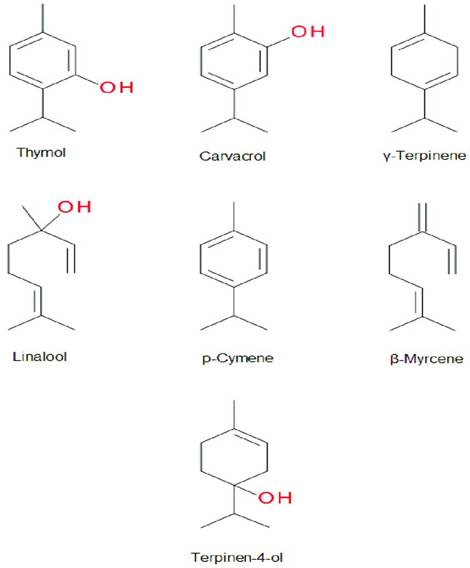
    Figure 2. Chemical structures of the major components in Thymus vulgaris essential oil (Kowalczyk et al., 2020).

    The antifungal activity of thyme EO is primarily attributed to the hydroxyl groups present in its phenolic terpenes. Specifically, thymol and carvacrol, biosynthesized from p-cymene, exert a significant antifungal effect by disrupting the fungal cell membrane through interactions with its sterols (Kowalczyk et al., 2020; Das et al., 2021). Carvacrol binds to these membrane sterols, causing structural damage and eventual cell death. Although the positional isomers thymol and carvacrol have their hydroxyl groups in different locations, their similar overall structure enables them to cause analogous membrane damage. A related membrane-targeting mechanism has been observed for linalool, which also compromises fungal cell stability and inhibits biofilm formation. Due to these structural characteristics, thyme EO and its constituents are highly effective at inhibiting fungal growth and the production of associated mycotoxins (Bound et al., 2016; Kowalczyk et al., 2020). This potency has been demonstrated in studies against post-harvest spoilage fungal pathogens, including Penicillium digitatum, where thyme EO and its main components (carvacrol, thymol, γ-terpinene, and linalool) remarkably inhibit spore germination and mycelial growth. The mechanism involves the rupture of the plasma membrane, leading to increased extracellular conductivity and the leakage of cellular contents (Camele et al., 2012; Memar et al., 2017; Chou et al., 2023).

    As discussed in our previous blog on chitosan-based edible coatings here, chitosan effectively controls postharvest fungal spoilage in citrus fruits. Building on this, this desk-based study proposes that both chitosan and thyme EO are effective agents for use as edible coatings and films in the food industry. Notably, chitosan coatings incorporated with thyme EO demonstrate stronger antifungal properties compared to non-composite chitosan coatings. Their combination at optimised concentrations could yield a more potent antifungal effect, capable of controlling not only green mould in fruits and vegetables but also a broader spectrum of postharvest fungal pathogens. These findings align with several studies indicating that the lipophilic bioactive compounds in essential oils play a major role in inhibiting fungal spore germination. For instance, thyme EO has proven effective not only in controlling green mould decay in fruits but also in managing other postharvest fungal diseases, including grey mould, blue mould, and sour rot, due to its potent antifungal properties (Satyal et al., 2016; Sharma et al., 2020).

    Applications of Thyme EO in the Food Industry

    In recent years, thyme essential oil EO has been extensively studied for its potential applications in food and beverages. It has been established as an effective natural preservative due to its ability to control foodborne microorganisms (Gonçalves et al., 2017). In fact, thyme EO is recognised as a functional food. A growing body of evidence indicates that thyme and its derivatives provide significant health benefits that extend beyond their role as flavour adjuncts. Consequently, based on these benefits which surpass basic nutrition, thyme and its derivatives meet the criteria to be classified as functional foods (Gonçalves et al., 2017; Serrano et al., 2020).

    Furthermore, Thyme EO offers a range of beneficial health effects (Figure 3), including anti-diabetic, antipathogenic, cardio-protective, anti-atherogenic, cancer-preventive, digestive stimulant, and anti-inflammatory properties (Gonçalves et al., 2017; Nieto, 2020; Hammoudi et al., 2022). Among these, its antioxidant and antimicrobial activities have received considerable attention for their role in improving food quality. In the meat industry, thyme EO is primarily employed as a natural antioxidant and preservative to prolong shelf-life. Numerous recent studies have demonstrated that incorporating thyme EO into both raw and cooked meat products can effectively inhibit lipid oxidation and rancidity during refrigerated and frozen storage, thereby maintaining the sensory and microbiological quality of meat and fish for extended periods (Guerrero et al., 2020; Yuan et al., 2021; Asuoty et al., 2023). For instance, Mahmoud et al. (2014) reported that immersing carp fish fillets in a 1% thymol solution significantly reduced mesophilic bacterial counts and extended the product’s shelf life from 4 to 12 days under storage at 5°C.
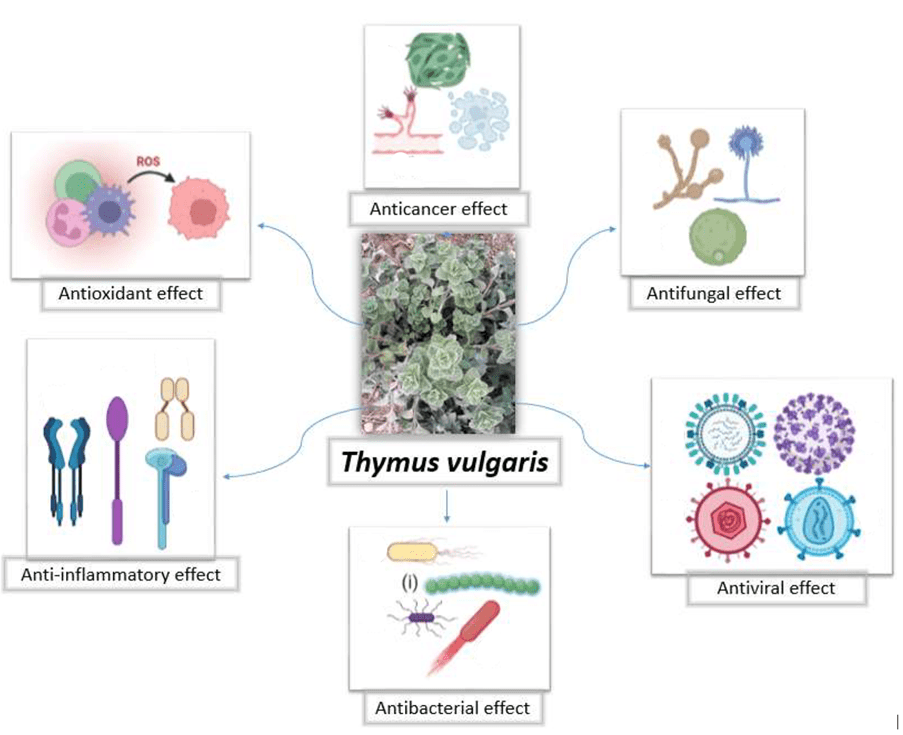
    Figure 3. Key biological activities and health benefits of Thymus vulgaris and its essential oil (Hammoudi et al., 2022).

    In many studies, thyme EO has demonstrated efficacy against several postharvest fungal pathogens and bacteria, including Aspergillus spp., Penicillium spp., Fusarium spp., yeasts, Enterobacteriaceae, and Staphylococcus aureus. Its mechanism of action primarily involves disrupting the integrity and permeability of the microbial cell membrane, which leads to the inhibition of enzymatic activity and eventual cell death. As a result, thyme EO is increasingly being utilised as a natural protective agent in a variety of food products such as meat, oranges, berries, and semi-processed foods, often incorporated into edible coatings for fresh produce (Ahmadian et al., 2020; Radünz et al., 2020; Pinto et al., 2021).

    The antioxidant activity of thyme leaves is also leveraged for food preservation. For instance, incorporating thyme leaves into goat feed enhanced the bromatological qualities and oxidative stability of the resulting cheese (Nieto, 2020). Similarly, supplementing dairy cow diets with thyme has been shown to benefit animal health while also improving milk yield and its physicochemical composition. However, the quantity of thyme added to animal feed must be carefully regulated to avoid adverse effects, such as intoxication or abortion, which can result from the overuse of its potent phenolic compounds (Kalaitsidis et al., 2021; Czech et al., 2023).

    The Fungicidal Mechanism of Thyme Essential Oil against Moulds

    Thyme EO is composed of approximately 13 major chemical compounds, which represent about 97.0% of its total volume. These constituents can be divided into four primary categories: monoterpenes (e.g., γ-terpinene), monoterpenoids (e.g., linalool), phenols (e.g., thymol), and sesquiterpenes. These groups account for 47.94%, 16.11%, 29.2%, and 3.69% of the total oil, respectively, and together comprise more than 75% of its chemical profile (Wan et al., 2019; Qi et al., 2023). Among these, thymol exhibits the strongest antifungal activity, surpassing both the complete thyme EO and its other principal compounds. The antifungal activity of linalool, a monoterpenoid, is comparatively higher than that of the monoterpene group. In contrast, γ-terpinene, a monoterpene, possesses the lowest efficacy in inhibiting fungal spore germination (Qi et al., 2023). For instance, a thymol emulsion concentration of 0.52 mg/mL inhibited approximately 90% of Penicillium digitatum spore germination, while 0.76 mg/mL was required for P. italicum. In comparison, a higher concentration of the complete thyme oil emulsion was needed to achieve the same degree of inhibition (Qi et al., 2023).

    In fact, a number of studies have proposed that the antifungal mechanism of thymol is primarily due to its hydroxyl group and a system of delocalised electrons. These structural features destabilise the microbial cytoplasmic membrane and reduce the pH gradient across it by acting as a proton exchanger (Marchese et al., 2016). This disruption depletes the ATP pool and collapses the proton motive force, ultimately leading to cell death (Tian et al., 2022).

    In contrast, p-cymene, a biosynthetic precursor to thymol, exhibits lower antifungal activity. Its chemical structure consists of a benzene ring that is para-substituted with methyl and isopropyl groups but lacks a hydroxyl group. Conversely, linalool possesses a hydroxyl group which facilitates its penetration across the cytoplasmic membrane, accounting for its stronger antifungal activity compared to monoterpenes like γ-terpinene and p-cymene (Memar et al., 2017). For instance, Hossain et al. (2019) found that while p-cymene itself exhibits only mild antifungal activity, it acts synergistically with carvacrol, an isomer of thymol also found in thyme EO, to combat fungal pathogens such as Penicillium spp. and Fusarium spp. These findings suggest that incorporating whole thyme EO into polysaccharide matrices, such as chitosan, could act synergistically to enhance antifungal efficacy against P. digitatum and other mycotoxin-producing fungi (Memar et al., 2017; Soppelsa et al., 2023).

    Table 2. Efficacy of thyme essential oil (EO) against Penicillium species in fruits.

    FruitsApplication MethodDose (v/v or w/v)Target PathogensKey FindingsReferences
    OrangeVapor phase in polypropylene film51.7 µL/L; stored 12 days at 7 °CP. digitatum, P. italicumReduced infected wounds, mycelial growth rate, and spore production in inoculated oranges.Pinto et al. (2021)
    GrapesSprayed suspension0.6, 0.9, 1.2, and 1.5 mg/mLPenicillium spp.Significant reduction in fungal growth and decay development at 1.5 mg/mL.Ghuffar et al. (2021)
    Mexican limeCarboxy methyl cellulose (CMC) coatingThyme EO (0.2%) in CMC (1.5%)P. digitatum, P. italicumControlled external mycelial growth in both in vitro and in vivo environments.Abbasi et al. (2023)
    Orange juiceDirect addition250, 500, and 1000 µL/LP. digitatum, P. italicumComplete inhibition of fungal growth and spore germination at all tested concentrations.Boubaker et al. (2016)
    Oranges (volatiles)Vapor phase in sealed environment10, 100, and 1000 µL/L (volatile exposure)P. digitatum, P. italicumComplete inhibition of fungal growth achieved at 1000 µL/L, or via volatiles from 10 µL in a 5 cm diameter Petri dish.Plaza et al. (2004)
    OrangesDirect application (assay)250, 500, and 1000 mg/LP. digitatum, P. italicumCompletely inhibited radial growth and spore germination at concentrations of 500 and 1000 mg/L.Jafarpour et al. (2006)

    Pinto et al. (2021) investigated the efficacy of thyme oil (Thymus vulgaris L.) in controlling Penicillium decay and extending the shelf-life of oranges during cold storage. Treatment with thyme EO vapour, delivered within a polypropylene film, significantly reduced the percentage of infected wounds on inoculated fruits stored for 12 days at 7 °C (Table 2). The study also found that the vapour treatment did not adversely affect the organoleptic attributes of the oranges, including juice taste, colour, and flavour. Therefore, active packaging incorporating EO, either in liquid or vapour forms, could be effectively employed alongside edible coatings, like chitosan and alginate, in the citrus industry. This approach shows promise for extending shelf-life for the fresh market and controlling postharvest decay (Pinto et al., 2021; Abbasi et al., 2023). These results align with those of Abbasi et al. (2023), who reported that a coating containing 0.2% thyme EO and carboxymethyl cellulose (CMC) effectively inhibited the external mycelial growth of both green and blue mould on Mexican limes in both in vitro and in vivo environments (Figure 4).
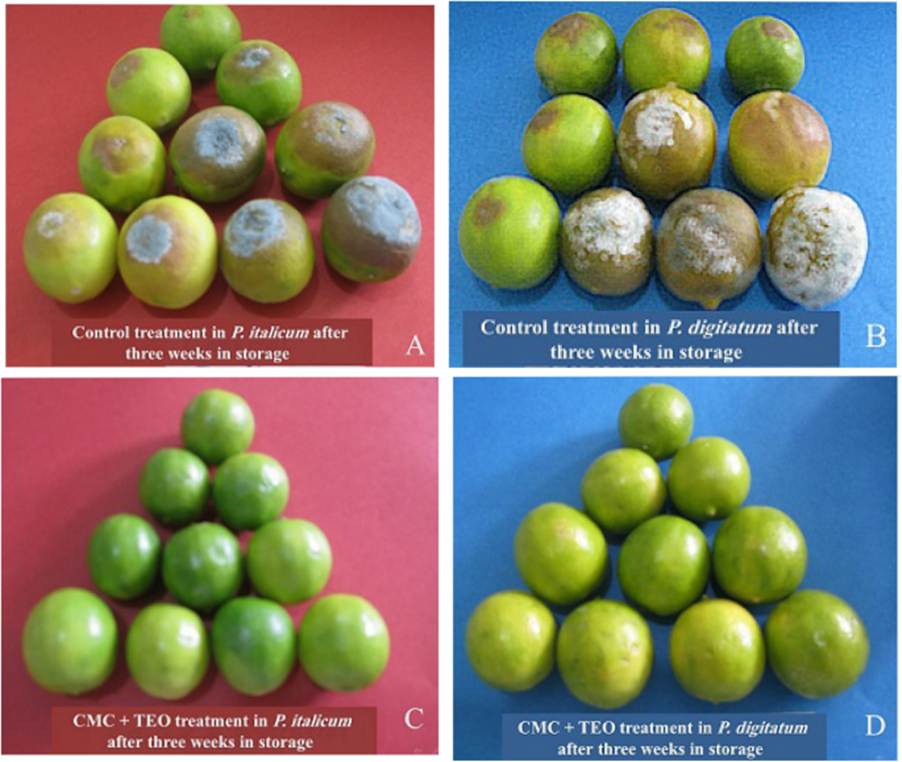
    Figure 4: Efficacy of a CMC coating incorporating thyme EO in controlling green mould (P. digitatum) and blue mould (P. italicum) on Mexican limes (Abbasi et al., 2023).

    The coating combining thyme EO and CMC demonstrated the highest antifungal activity in vitro compared to either component applied individually. Scanning electron microscopy (SEM) revealed that the combined CMC and thyme EO treatment altered the morphology of both P. digitatum and P. italicum hyphae, resulting in wrinkled and distorted surfaces. As a result, incorporating thyme EO into a polysaccharide-based edible coating is preferable to applying it separately for preventing postharvest infections in citrus and non-citrus fruits, as this combination is likely to yield more effective results (Ghuffar et al., 2021; Abbasi et al., 2023). In fact, thymol damages the fungal cell membrane by interacting with ergosterol, disrupts ionic balances (e.g., Ca²⁺ and H⁺), and alters mycelial morphology. These actions ultimately lead to the mis-localisation of chitin within the hyphae (Nazzaro et al., 2017; Pavoni et al., 2019). These findings indicate that thymol, the primary active ingredient in thyme oil, is principally responsible for its antifungal properties. It is therefore widely accepted that among thyme EO constituents, phenolic compounds like thymol exhibit the highest antifungal efficacy, followed by oxygenated terpenes and terpenoids (Memar et al., 2017; Wan et al., 2019).

    Another study revealed that thyme EO completely inhibited the mycelial growth of P. digitatum and P. italicum at a concentration of 1000 µL/L, while spore germination was inhibited at 500 µL/L in vitro. This effect is attributed to the oil’s strong antifungal and antispore activities (Boubaker et al., 2016). This result is consistent with the findings of Plaza et al. (2004), who reported that thyme EO could serve as an alternative to synthetic fungicides for controlling postharvest pathogens in citrus. They observed complete inhibition of fungal growth either at 1000 µL/L or via volatile compounds emitted from 10 µL of EO in a 5 cm diameter Petri dish. Similarly, Jafarpour et al. (2006) found that thyme EO at concentrations of 500 and 1000 mg/L almost completely inhibited the radial growth and spore germination of P. digitatum and P. italicum incubated at 25–28 °C for 8 days (Figure 5). Collectively, these studies indicate that thyme EO, being natural and non-toxic to humans, could effectively substitute for harmful synthetic fungicides in postharvest treatments.
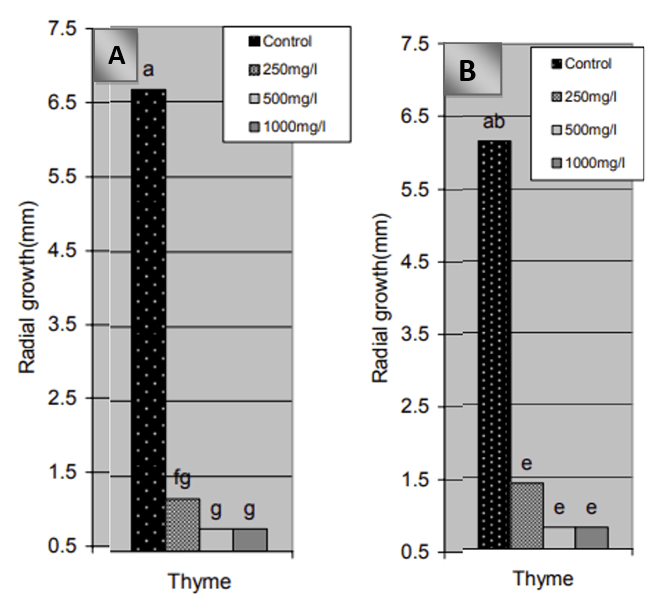
    Figure 5. Inhibitory effects of thyme essential oil (EO) on the radial growth of (A) Penicillium italicum and (B) Penicillium digitatum at various concentrations (Jafarpour et al., 2006).

    Hence, incorporating thyme EO into chitosan coatings enhances fungistatic activity against P. digitatum. As green mould is the most destructive postharvest disease of lemons, this combination offers significant potential for improving postharvest protection and extending shelf-life (Kowalczyk et al., 2020; Das et al., 2021).

    The Synergistic Mechanism Between Thyme Essential Oil and Chitosan for Improved Edible Coating Structures

    Antimicrobial biopolymer coatings are highly desirable for a variety of applications in the food sector. Research into the preparation and characterisation of chitosan-based coatings aims to understand how their biochemical composition interacts with thyme EO, thereby influencing their antibacterial efficacy and physical properties. According to Sedlaříková et al. (2019), the stability and compatibility of essential oil within a chitosan matrix can be enhanced by incorporating the stabilising agent Tween 80 alongside thyme EO as the active ingredient. Tween 80, a hydrophilic surfactant, facilitates the transport of the oil to the film surface. Furthermore, the addition of thyme EO to chitosan significantly reduces the particle size in coating solutions, concurrently increasing film thickness and enhancing the barrier properties of the resulting coatings. Thyme EO demonstrates excellent antimicrobial properties even at low concentrations; consequently, chitosan films incorporated with thyme EO represent a promising tool for antimicrobial packaging applications (Correa‐Pacheco et al., 2017; Memar et al., 2017; Sedlaříková et al., 2019). Moreover, several studies have indicated that the lipophilic bioactive compounds in essential oils play a major role in hindering fungal spore germination. Their lipophilic nature enables them to penetrate the phospholipid bilayer of the fungal cell membrane, ultimately inducing membrane rupture (Sharma et al., 2017). For instance, Qi et al. (2023) observed that this disruption causes a massive loss of cytoplasmic material, leading to cell shrinkage and the formation of rough, corrugated surfaces. This results in severe morphological deformation, collapse, and deterioration of the cell wall in both spores and hyphae.

    Furthermore, these composite coatings enhance the shelf-life and marketability of lemons. They improve fruit glossiness, which attracts consumer attention compared to desiccated and dull fruits. Modern consumers are increasingly conscious of visual attributes such as size, colour, and firmness, while also prioritising internal qualities like flavour, aromatic volatile compounds, and health-functional components. Consequently, purchasing decisions are based on a combination of appearance, quality, and value for money (Serna-Escolano et al., 2021; Sánchez-Bravo et al., 2022). Thus, the novel approach of combining chitosan-based edible coatings with thyme EO may effectively enhance antifungal activity, extend the shelf-life of fruits and vegetables, and ensure safety for human consumption (Chein et al., 2019).

    In conclusion, thyme essential oil EO, renowned for its potent antimicrobial and antioxidant properties, holds significant promise in postharvest disease management. Its incorporation into edible coatings, particularly in combination with chitosan, enhances antifungal and antibiofilm activities against postharvest fungal pathogens such as P. digitatum, Fusarium spp. and Botrytis effectively extending the shelf-life of fresh produce. Beyond its preservative effects, thyme EO contributes to the development of functional, biodegradable packaging materials with improved mechanical and barrier properties. This study highlights the potential of thyme EO-based coatings as a natural, sustainable alternative to synthetic fungicides, offering innovative solutions for postharvest management while reinforcing the broader applications of thyme EO in food preservation and safety.

    References

    Abbasi, M., Dastjerdi, A.M., Seyahooei, M.A., Shamili, M. and Madani, B. (2023). Postharvest control of green and blue molds on Mexican lime fruit caused by Penicillium species using Thymus vulgaris essential oil and carboxy methyl cellulose. Journal of Plant Diseases and Protection130(5), pp.1017-1026.

    Asuoty, M.S., Fayza, A.I. and Abou-Arab, N.M. (2023). Effect of Thyme Oil and Acetic Acid on The Quality and Shelf Life of Fresh Meat. Journal of Advanced Veterinary Research13(6), pp.1079-1083.

    Ahmadian, A., Seidavi, A. and Phillips, C.J. (2020). Growth, carcass composition, haematology and immunity of broilers supplemented with sumac berries (Rhus coriaria L.) and thyme (Thymus vulgaris). Animals10(3), p.513.

    Baj, T., Biernasiuk, A., Wróbel, R. and Malm, A. (2020). Chemical composition and in vitro activity of Origanum vulgare L., Satureja hortensis L., Thymus serpyllum L. and Thymus vulgaris L. essential oils towards oral isolates of Candida albicans and Candida glabrata. Open Chemistry18(1), pp.108-118.

    Boubaker, H., Karim, H., El Hamdaoui, A., Msanda, F., Leach, D., Bombarda, I., Vanloot, P., Abbad, A., Boudyach, E.H. and Aoumar, A.A.B. (2016). Chemical characterization and antifungal activities of four Thymus species essential oils against postharvest fungal pathogens of citrus. Industrial Crops and Products86, pp.95-101.

    Bound, D.J., Murthy, P.S. and Srinivas, P. (2016). 2, 3-Dideoxyglucosides of selected terpene phenols and alcohols as potent antifungal compounds. Food Chemistry210, pp.371-380.

    Camele, I., Altieri, L., De Martino, L., De Feo, V., Mancini, E. and Rana, G.L. (2012). In vitro control of post-harvest fruit rot fungi by some plant essential oil components. International journal of molecular sciences13(2), pp.2290-2300.

    Chou, M.Y., Andersen, T.B., Mechan Llontop, M.E., Beculheimer, N., Sow, A., Moreno, N., Shade, A., Hamberger, B. and Bonito, G. (2023). Terpenes modulate bacterial and fungal growth and sorghum rhizobiome communities. Microbiology Spectrum11(5), pp.e01332-23.

    Correa‐Pacheco, Z.N., Bautista‐Baños, S., Valle‐Marquina, M.Á. and Hernández‐López, M. (2017). The effect of nanostructured chitosan and chitosan‐thyme essential oil coatings on Colletotrichum gloeosporioides growth in vitro and on cv Hass avocado and fruit quality. Journal of Phytopathology165(5), pp.297-305.

    Czech, A., Klimiuk, K. and Sembratowicz, I. (2023). The effect of thyme herb in diets for fattening pigs on their growth performance and health. Plos one18(10), p.e0291054.

    Das, S., Singh, V.K., Dwivedy, A.K., Chaudhari, A.K. and Dubey, N.K. (2021). Insecticidal and fungicidal efficacy of essential oils and nanoencapsulation approaches for the development of next generation ecofriendly green preservatives for management of stored food commodities: an overview. International Journal of Pest Management, pp.1-32.

    Ghuffar, S., Irshad, G., Naz, F. and Khan, M.A. (2021). Studies of Penicillium species associated with blue mold disease of grapes and management through plant essential oils as non-hazardous botanical fungicides. Green Processing and Synthesis10(1), pp.021-036.

    Gonçalves, N.D., de Lima Pena, F., Sartoratto, A., Derlamelina, C., Duarte, M.C.T., Antunes, A.E.C. and Prata, A.S. (2017). Encapsulated thyme (Thymus vulgaris) essential oil used as a natural preservative in bakery product. Food Research International96, pp.154-160.

    Guerrero, A., Ferrero, S., Barahona, M., Boito, B., Lisbinski, E., Maggi, F. and Sañudo, C. (2020). Effects of active edible coating based on thyme and garlic essential oils on lamb meat shelf life after long‐term frozen storage. Journal of the Science of Food and Agriculture100(2), pp.656-664.

    Hammoudi, D.H., Krayem, M., Khaled, S. and Younes, S. (2022). A focused insight into thyme: Biological, chemical, and therapeutic properties of an indigenous Mediterranean herb. Nutrients14(10), p.2104.

    Hossain, F., Follett, P., Salmieri, S., Vu, K.D., Fraschini, C. and Lacroix, M. (2019). Antifungal activities of combined treatments of irradiation and essential oils (EOs) encapsulated chitosan nanocomposite films in in vitro and in situ conditions. International journal of food microbiology295, pp.33-40.

    Jafarpour, B., Rastegar, M.F., Jahanbakhsh, V., Azizi, M. and Farzad, S. (2006), August. Inhibitory Effect Of Some Medicinal Plants’essential Oils On Postharvest Fungal Disease Of Citrus Fruits. In XXVII International Horticultural Congress-IHC2006: International Symposium on The Role of Postharvest Technology, 768, pp.279-286.

    Kalaitsidis, K., Sidiropoulou, E., Tsiftsoglou, O., Mourtzinos, I., Moschakis, T., Basdagianni, Z., Vasilopoulos, S., Chatzigavriel, S., Lazari, D. and Giannenas, I. (2021). Effects of cornus and its mixture with oregano and thyme essential oils on dairy sheep performance and milk, yoghurt and cheese quality under heat stress. Animals11(4), p.1063.

    Kim, M., Sowndhararajan, K. and Kim, S. (2022). The chemical composition and biological activities of essential oil from Korean native thyme Bak-Ri-Hyang (Thymus quinquecostatus Celak.). Molecules27(13), p.4251.

    Kowalczyk, A., Przychodna, M., Sopata, S., Bodalska, A. and Fecka, I. (2020). Thymol and thyme essential oil—new insights into selected therapeutic applications. Molecules25(18), p.4125.

    Marchese, A., Orhan, I.E., Daglia, M., Barbieri, R., Di Lorenzo, A., Nabavi, S.F., Gortzi, O., Izadi, M. and Nabavi, S.M. (2016). Antibacterial and antifungal activities of thymol: A brief review of the literature. Food chemistry210, pp.402-414.

    Memar, M.Y., Raei, P., Alizadeh, N., Aghdam, M.A. and Kafil, H.S. (2017). Carvacrol and thymol: strong antimicrobial agents against resistant isolates. Reviews and Research in Medical Microbiology28(2), pp.63-68.

    Mohammed, M.A., Syeda, J.T., Wasan, K.M. and Wasan, E.K. (2017). An overview of chitosan nanoparticles and its application in non-parenteral drug delivery. Pharmaceutics9(4), p.53.

    Nazzaro, F., Fratianni, F., Coppola, R. and De Feo, V. (2017). Essential oils and antifungal activity. Pharmaceuticals10(4), p.86.

    Nieto, G. (2020). A review on applications and uses of thymus in the food industry. Plants9(8), p.961.

    Pavoni, L., Maggi, F., Mancianti, F., Nardoni, S., Ebani, V.V., Cespi, M., Bonacucina, G. and Palmieri, G.F. (2019). Microemulsions: An effective encapsulation tool to enhance the antimicrobial activity of selected EOs. Journal of drug delivery science and technology53, p.101101.

    Pinto, L., Cefola, M., Bonifacio, M.A., Cometa, S., Bocchino, C., Pace, B., De Giglio, E., Palumbo, M., Sada, A., Logrieco, A.F. and Baruzzi, F. (2021). Effect of red thyme oil (Thymus vulgaris L.) vapours on fungal decay, quality parameters and shelf-life of oranges during cold storage. Food Chemistry336, p.127590.

    Plaza, P., Torres, R., Usall, J., Lamarca, N. and Vinas, I. (2004). Evaluation of the potential of commercial post-harvest application of essential oils to control citrus decay. The Journal of Horticultural Science and Biotechnology79(6), pp.935-940.

    Qi, X., Zhong, S., Schwarz, P., Chen, B. and Rao, J. (2023). Mechanisms of antifungal and mycotoxin inhibitory properties of Thymus vulgaris L. essential oil and their major chemical constituents in emulsion-based delivery system. Industrial Crops and Products197, p.116575.

    Radünz, M., dos Santos Hackbart, H.C., Camargo, T.M., Nunes, C.F.P., de Barros, F.A.P., Dal Magro, J., Sanches Filho, P.J., Gandra, E.A., Radünz, A.L. and da Rosa Zavareze, E. (2020). Antimicrobial potential of spray drying encapsulated thyme (Thymus vulgaris) essential oil on the conservation of hamburger-like meat products. International Journal of Food Microbiology330, p.108696.

    Satyal, P., Murray, B.L., McFeeters, R.L. and Setzer, W.N. (2016). Essential oil characterization of Thymus vulgaris from various geographical locations. Foods5(4), p.70.

    Sedlaříková, J., Janalíková, M., Rudolf, O., Pavlačková, J., Egner, P., Peer, P., Varaďová, V. and Krejčí, J. (2019). Chitosan/thyme oil systems as affected by stabilizing agent: Physical and antimicrobial properties. Coatings9(3), p.165.

    Serrano, A., González-Sarrías, A., Tomás-Barberán, F.A., Avellaneda, A., Gironés-Vilaplana, A., Nieto, G. and Ros-Berruezo, G. (2020). Anti-inflammatory and antioxidant effects of regular consumption of cooked ham enriched with dietary phenolics in diet-induced obese mice. Antioxidants9(7), p.639.

    Sharma, S., Barkauskaite, S., Duffy, B., Jaiswal, A.K. and Jaiswal, S. (2020). Characterization and antimicrobial activity of biodegradable active packaging enriched with clove and thyme essential oil for food packaging application. Foods9(8), p.1117.

    Soppelsa, S., Van Hemelrijck, W., Bylemans, D. and Andreotti, C. (2023). Essential Oils and Chitosan Applications to Protect Apples against Postharvest Diseases and to Extend Shelf Life. Agronomy13(3), p.822.

    Tian, F., Woo, S.Y., Lee, S.Y., Park, S.B., Zheng, Y. and Chun, H.S. (2022). Antifungal Activity of Essential Oil and Plant-Derived Natural Compounds against Aspergillus flavus. Antibiotics11(12), p.1727.

    Wan, J., Zhong, S., Schwarz, P., Chen, B. and Rao, J. (2019). Physical properties, antifungal and mycotoxin inhibitory activities of five essential oil nanoemulsions: Impact of oil compositions and processing parameters. Food Chemistry, 291, pp.199–206.

    Yuan, L., Feng, W., Zhang, Z., Peng, Y., Xiao, Y. and Chen, J. (2021). Effect of potato starch-based antibacterial composite films with thyme oil microemulsion or microcapsule on shelf life of chilled meat. LWT- Food Science and Technology139, p.110462

    • Citrus fruits, including orange (Citrus sinensis), lemon (Citrus limon), grapefruit (Citrus paradisi), and lime (Citrus aurantifolia), and mandarin (Citrus reticulata), are among the most widely cultivated and economically important fruit crops worldwide. Belonging to the Rutaceae family, these fruits primarily grow in tropical and subtropical regions (Topi, 2020). Citrus fruits are valued for their juice, peels, and essential oils, which possess notable antimicrobial and nutritional properties (Jana et al., 2020). Citrus trees are evergreen and are widely cultivated in countries such as China, Nepal, India, Mexico, Turkey, Brazil, Egypt, Argentina, the United States, Iran, Italy, and Spain (Curk et al., 2016).

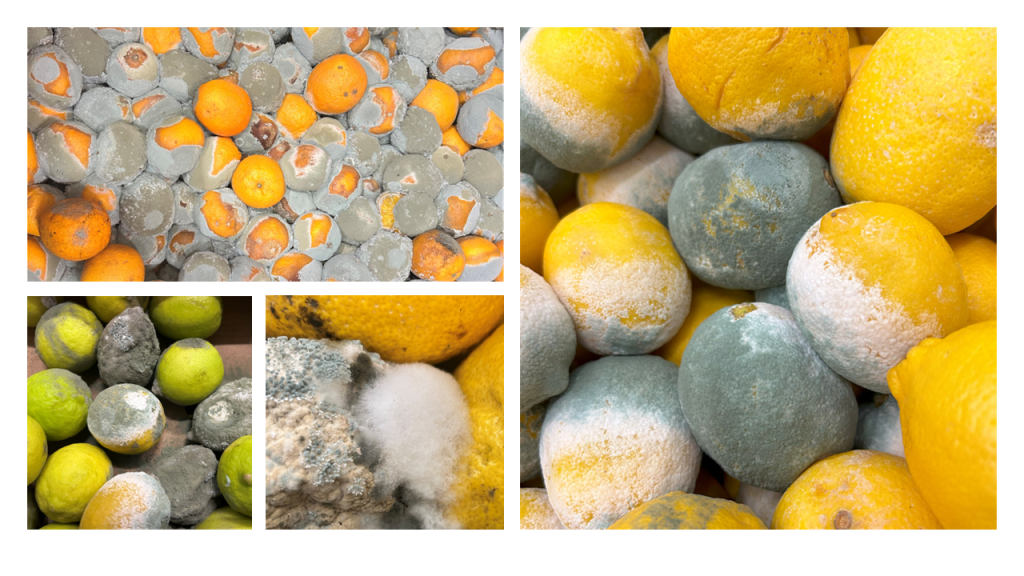
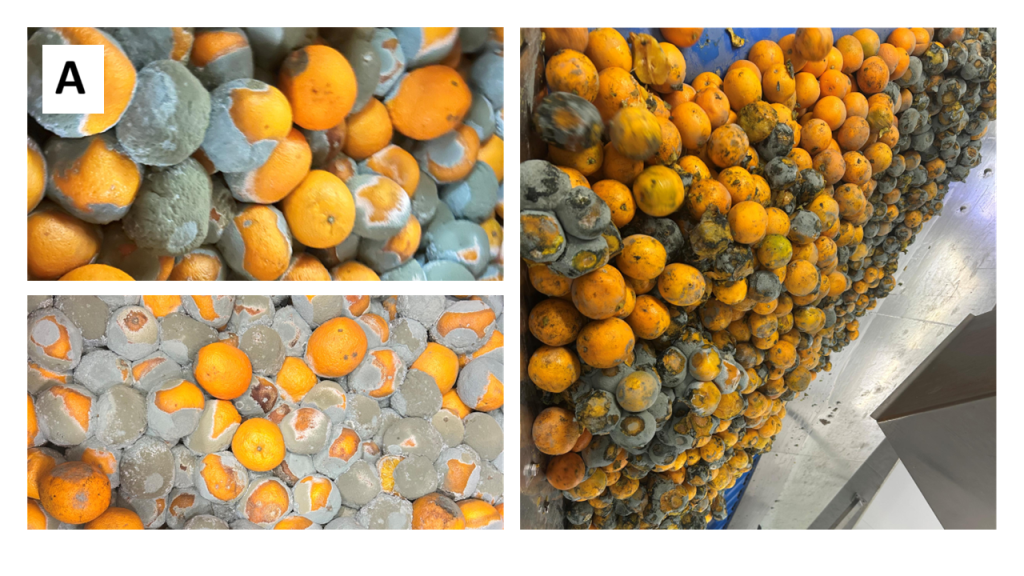
      Figure 1: Postharvest citrus losses caused by Penicillium infestation during storage.

      Postharvest losses in Citrus are mainly caused by the fruit’s metabolic disorders and diseases, which can lead to severe economic losses ranging from 30% to 50% of total production within 60 days of storage (Bazioli et al., 2019; Cheng et al., 2020). The major postharvest fungal diseases affecting Citrus fruits are green mould and blue mould, caused by Penicillium digitatum and P. italicum, respectively. Among these, Penicillium digitatum alone is responsible for over 80% of postharvest losses (Figure 1) under high moisture conditions (Bazioli et al., 2019). Fruits often become contaminated during harvesting, packing, storage, and transportation, primarily due to skin damage (Strano et al., 2022).

      In the storage of Citrus fruits, fungicides remain the primary method for controlling green mould caused by the necrotrophic fungus P. digitatum. However, this approach is unsustainable and poses risks to human health (Cheng et al., 2019). Alternatively, BECs incorporated with essential oils have proven effective in protecting fruits against fungal infestation and mechanical damage while improving the marketability of Citrus fruits (Maftoonazad and Ramaswamy, 2019; El-Gioushy et al., 2022).

      Chitosan, a popular eco-friendly, biodegradable polysaccharide, is widely used as a safe preservative due to its excellent film-forming properties. It helps extend shelf life and reduces qualitative decay of fresh fruits and vegetables during the postharvest period (Zhang et al., 2021).

      This post aims to address the research question: “Are chitosan-based edible coatings effective in controlling Penicillium moulds in Citrus fruits?”

      Key considerations for choosing BECs before coatings in fruits and vegetables.

      ECs can be applied directly to the surface of foods to reduce environmental stresses (Eyiz et al., 2020). To be effective, ECs must meet several criteria: they should be safe for consumption, biodegradable, sustainable, compatible with essential oils (EOs), and comply with both food safety and environmental regulations (Chen et al., 2020; Abdel-Naeem et al., 2021). ECs serve as excellent barriers against gas and moisture exchange, delay fruit ripening and senescence, maintain fruit glossiness, ensure mechanical stability, and inhibit infestation by pests and pathogens (Iñiguez-Moreno et al., 2021; Yadav et al., 2022). Moreover, good ECs are expected to have strong compatibility with EOs, which improves their longevity, wetting, and adhesion capabilities over time (Marín et al., 2019). For example, Pirozzi et al. (2020) reported that incorporating EOs into edible films significantly enhances their durability and strength during refrigerated storage compared to films without EOs.

      Similarly, the quality of ECs depends on factors such as pH, thickness, viscosity, total viable microbial cells present, and the degree of polymer cross-linking (Iñiguez-Moreno et al., 2021). Consequently, good ECs possess the ability to resist mechanical shocks and abrasion, thereby maintaining the structural integrity of fruits. Additionally, incorporating essential oils (EOs) into edible coatings not only enhances their mechanical strength, water resistance, light-blocking, and thermal resistance properties but also improves their antioxidant and antimicrobial effects (Ebrahimzadeh et al., 2023).

      Postharvest Impact and Disease Characteristics of Penicilium Mould in Citrus Fruits

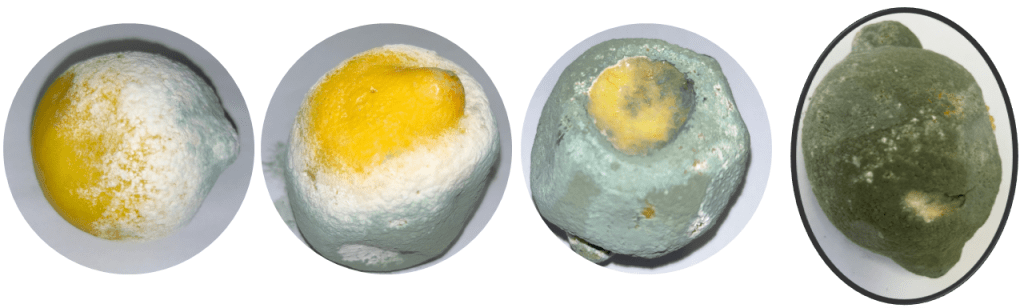
      Postharvest losses in Citrus fruits may occur due to two primary factors: physical losses resulting from injuries and diseases, and quality losses caused by metabolic and compositional changes within the fruit itself. Early symptoms of green mould include small, soft, watery spots on the peel accompanied by white cottony growth (Figure 2).

      Figure 2: Mycelial Growth and Disease Progression of Penicillium spp. in Stored Citrus.

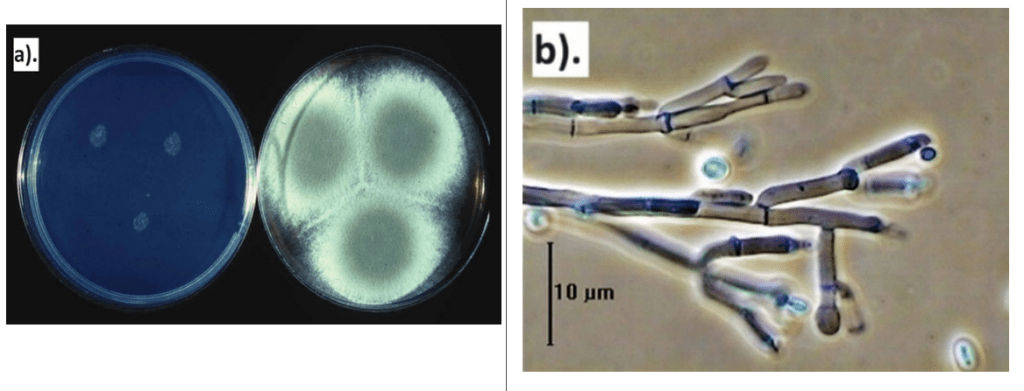
      In severe infestations, fruits can be completely covered by green mould and develop black lesions or spots, leading to desiccation and shrinkage (Figure 2). When incubated for 24–36 hours at 24°C on Malt Extract Agar media, the mould forms a white circular colony (Figure 3a). Under severe conditions, the spot can enlarge by 2–4 cm per day. The colony’s centre produces green asexual spores (conidia) surrounded by thick white mycelium. Consequently, infested fruits rapidly collapse and rot under high humidity, or shrink and mummify under lower humidity levels (Bhatta, 2022; CABI, 2023).

      Infected fruits produce white mycelia and green conidia (Figure 3b), which are characteristic symptoms of green mould rot in lemons (Lin et al., 2019). Green mould is a major cause of postharvest losses in lemons and other Citrus fruits, causing approximately 60–80% spoilage under ambient storage conditions. In contrast, Penicillium italicum, the fungal pathogen responsible for blue mould, is more prevalent in cold-stored fruits. Combined infestation by P. digitatum and P. italicum during storage can result in over 90% fruit loss globally during postharvest stages (Li et al., 2020; Strano et al., 2022). Consequently, green mould is considered the largest contributor to postharvest diseases, leading to severe economic losses. Regarding mycotoxin production, P. digitatum is not known to produce patulin, a mycotoxin commonly linked to P. expansum, a necrotrophic pathogen that causes blue mould in fruits such as apples, pears, cherries, and citrus (Pitt, 2014; Li et al., 2020).    

      Figure 3: a) Penicillium digitatum in culture plate. b). Conidiophores of 7 days old culture of P. digitatum (CABI, 2023).

      The mycelium of P. digitatum produces enzymes such as glucose oxidase and catalase, which break down the cell wall structure of fruits and vegetables. This degradation initiates shrinkage, leading to a sunken, mummified appearance of the fruit (Figure 2). Consequently, the infected pericarp and mesocarp cells undergo plasmolysis, resulting in soft, watery rot spots on the fruit (El-Gendi et al., 2021).

      Disease Cycle of Penicillium digitatum.

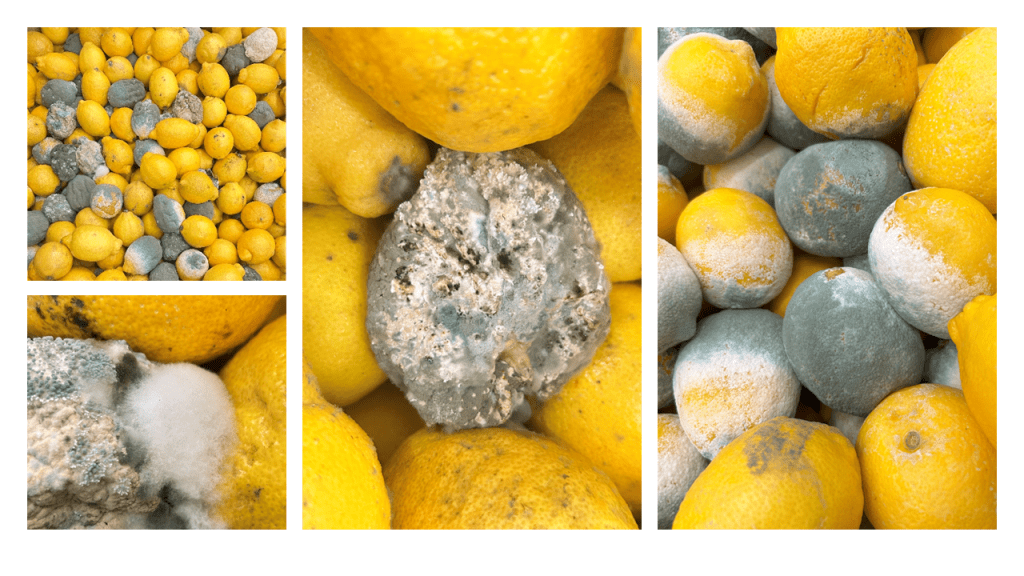
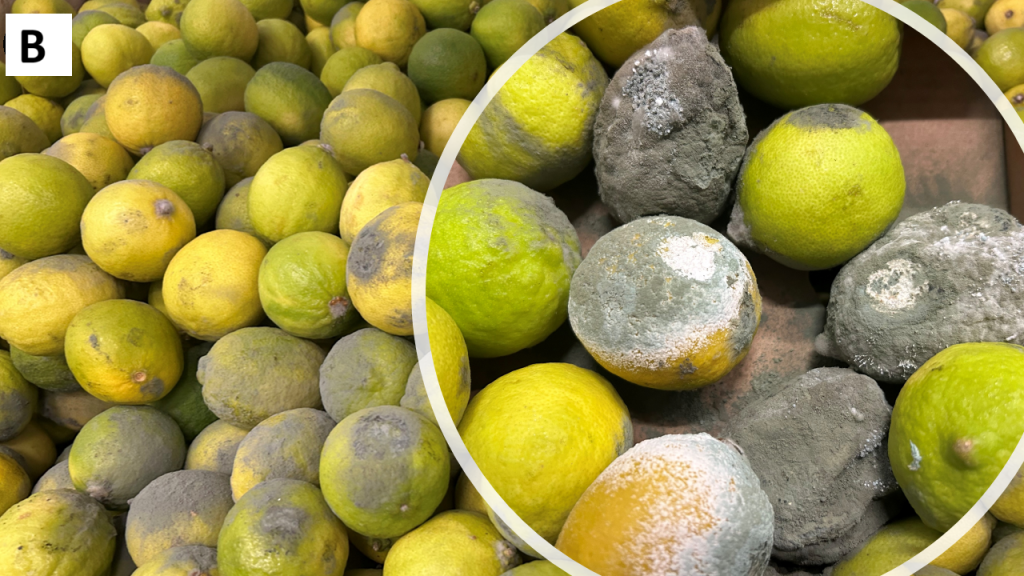
      P. digitatum is a mesophilic fungus that survives in the soil of citrus-producing areas from season to season, primarily as conidia. Airborne spores penetrate the rind through wounds and initiate infection. Some infections can also result from damage to the oil glands alone. Additionally, the fungus can enter fruit through certain physiologically induced injuries, such as stem-end rind breakdown and chilling injury (Aglave, 2018; Costa et al., 2019). Generally, in packed containers, the fungus does not spread from rotting fruit to nearby healthy fruit if the rind remains intact. However, in packinghouses, the infection and sporulation cycle can recur frequently throughout the season. Green mould is typically more common in late-season and damaged-rind fruits. It proliferates best at temperatures around 24°C, grows slowly below 10°C and above 30°C, and nearly ceases growth at 1°C (Aglave, 2018). Industrially, especially during the summer months, damage rates during transportation and storage can reach 70–80%, and in extreme cases, up to 100%. This high level of spoilage is primarily attributed to elevated temperatures affecting the fruit from harvest, through farm-level storage and transportation, to warehouse storage (Figure 4a,b).

      Figure 4: Severe Penicillium mould spoilage in A) Oranges and B) Limes across the postharvest supply chain.

      Sustainable Management of Penicillium Mould

      The management of this mould includes careful handling and picking of fruits to minimise the risk of infestation at the farm level (Costa et al., 2019). Sanitary practices are essential to prevent fungal sporulation from diseased fruits and the accumulation of spores on equipment, packaging, and storage facilities during postharvest handling and storage. The formation of mould can also be significantly delayed by rapidly cooling fruits after packaging (Costa et al., 2019; Papoutsis et al., 2019). Additionally, numerous studies have shown that successful prevention of postharvest fungal spoilage in citrus can be achieved by incorporating plant-based essential oils into edible coatings (Bhandari et al., 2022; Salem et al., 2022).

      The Biochemical Structure, relation between structures, and properties of Chitosan.

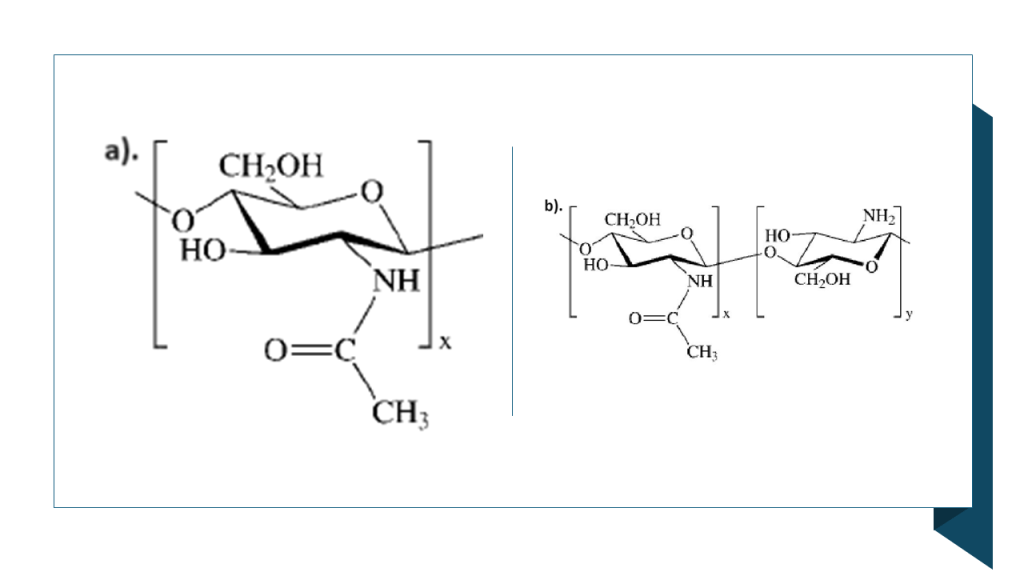
      Chemically, chitosan is composed of D-glucosamine units and N-acetyl D-glucosamine, obtained through the partial deacetylation of chitin (Figure 5b). It has a wide range of applications in the food, chemical, medical, and pharmaceutical industries (Muñoz-Tebar et al., 2023).

      Figure 5: a). Chemical structure of Chitin; b). Chemical structure of Chitosan (Ibrahim and El-Zairy, 2015).

      Chitin is the most prevalent naturally occurring semipermeable biopolymer coating after cellulose and is structurally very similar to cellulose (Figure 5a). It can modify the internal atmosphere of coated fruits by reducing transpiration rates, thereby delaying ripening. Crosslinked chitosan films offer enhanced strength and resistance, making them suitable for handling. Aqueous chitosan coatings and films are transparent, flexible, durable, and provide good oxygen barrier properties (Ebrahimzadeh et al., 2023). Because of their antifungal properties, chitosan edible coatings have significant potential for use in fruits and vegetables to control various pre- and postharvest diseases in fresh produce such as plums, strawberries, oranges, and tomatoes (Chaudhary et al., 2020).

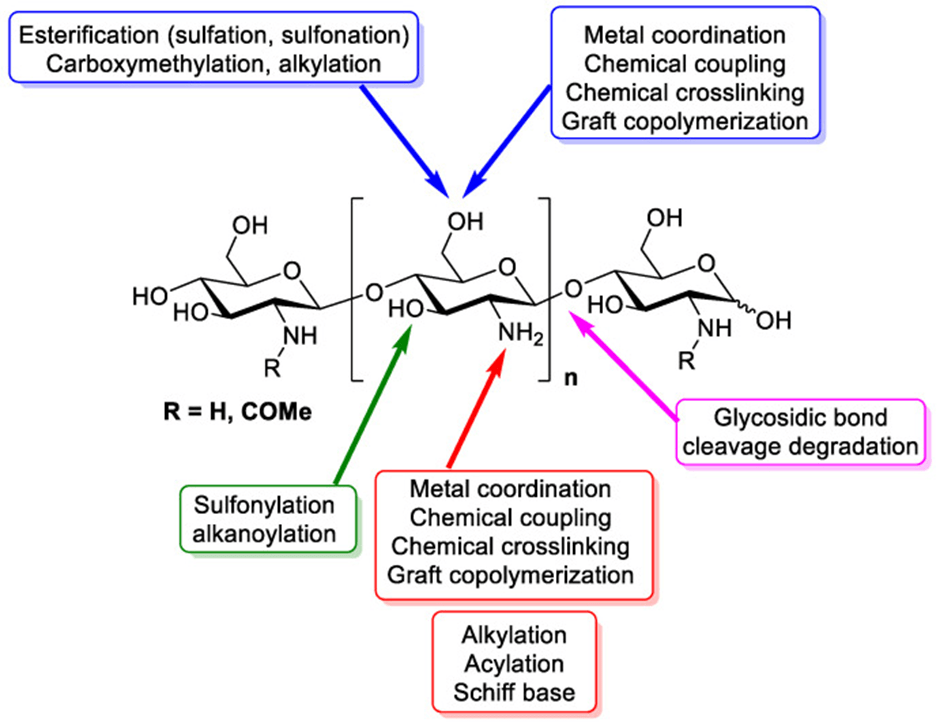
      The properties of the functional groups in chitosan’s structure are illustrated in Figure 6. Chitin is generally considered an acetylated polysaccharide composed of repeating units of N-acetyl-D-glucosamine linked by β(1→4) bonds. Chitosan (poly-β(1,4)-2-amino-2-deoxy-D-glucose) is produced by the deacetylation of chitin through a chemical process (Panahi et al., 2023).

      Figure 6: Functional groups present in chitosan  structure (Aranaz et al., 2021).

      Chitosan can form transparent or slightly yellowish, smooth, cohesive, and flexible coatings with high mechanical resistance compared to other commercial polymers. This is due to its excellent hydrophilic properties, safety, and suitability for a wide range of food products (Muñoz-Tebar et al., 2023). Typically, chitosan concentrations used in coatings range from 1 to 3% (w/v) and are dissolved in an aqueous solution acidified with lactic or acetic acid at concentrations between 1% and 3% (v/v) (Kumar et al., 2020; Hossain et al., 2019; Muñoz-Tebar et al., 2023).

      Chitosan edible films can also be combined with plant extracts (essential oils) and other environmentally friendly synthetic materials, such as nanoparticles derived from plant extracts, to enhance their antimicrobial properties (Ali et al., 2022; Hossain et al., 2022).

      Biochemical Properties of Chitosan for Edible Coatings and its Application In Citrus Fruits to Control Postharvest Fungal Pathogens.

      The presence of functional groups in chitosan, such as hydroxyl (-OH) and amine (-NH₂), are the dominant reactive sites responsible for its antimicrobial activity. This means that the antimicrobial effect of chitosan is stronger when free (-OH) and (-NH₂) groups are present (Nunes et al., 2021). Tayel et al. (2016) investigated the antifungal properties of chitosan using yeast extract–peptone–dextrose agar plates inoculated with 0.1 mL of fungal spore suspension containing 10⁶–10⁷ CFU/mL of both P. digitatum and P. italicum. After 48 hours of incubation at 25 °C, chitosan exhibited inhibitory effects, showing a 20.3 mm inhibition zone for P. digitatum and a minimum fungicidal concentration of 67.5 μg/mL. Similarly, it showed a 21.4 mm inhibition zone for P. italicum and an MFC of 62.5 μg/mL.

      The antifungal activity of chitosan was significantly enhanced by incorporating plant extracts. For example, the widest growth inhibition zones for P. digitatum (24.5 mm) and P. italicum (25.2 mm) were observed with Lepidium sativum seed extract. Corresponding MFCs were 32.5 μg/mL against P. digitatum and 27.5 μg/mL against P. italicum (Tayel et al., 2016). However, the growth inhibition zones for both fungi were zero or not detected under some conditions. When coated with chitosan + Lepidium sativum seed extract and with chitosan alone, fungal counts for P. digitatum and P. italicum were 1.9 × 10² CFU/mL and 1.3 × 10² CFU/mL, and 35 × 10³ CFU/mL and 25 × 10³ CFU/mL, respectively. This contrasts with the counts of 28 × 10⁶ CFU/mL for P. digitatum and 31 × 10⁶ CFU/mL for P. italicum in control fruits. These findings suggest that chitosan alone possesses potent antifungal properties against the fungi causing both green and blue mould (Tayel et al., 2016).

      Overall, these results indicate that P. italicum is generally more sensitive than P. digitatum, as evidenced by its wider inhibition zones, and lower minimum inhibitory concentration (MIC) and minimum fungicidal concentration (MFC) values (Tayel et al., 2016; Papoutsis et al., 2019).

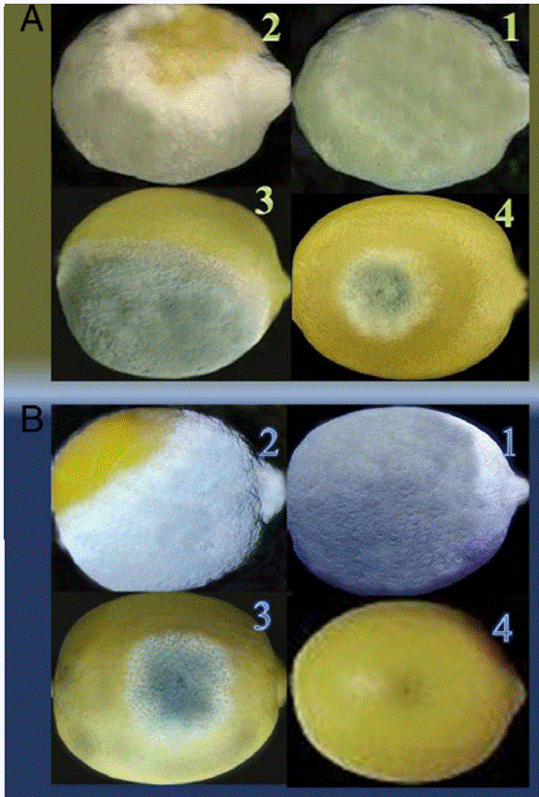
      Figure 7: Development of P. digitatum (A) and P. italicum (B) on infected lemons after 14 days of storage under different treatments: (1) control; (2) commercial antifungal; (3) chitosan coating; (4) chitosan + Lepidium sativum extract (Tayel et al., 2016).

      Figure 7 shows a comparison of several coating treatments on lemon fruits infected with P. digitatum and P. italicum. After 14 days of infection, fruits coated with chitosan alone and with a combination of chitosan and L. sativum extract were significantly protected against mould spread. In contrast, fruits without any coating or those treated with a commercial antifungal were almost entirely covered with green and blue mould (Tayel et al., 2016).

      Table 1: The impact of different chitosan-based formulation coatings on the progress of Penicillium spoilage in lemon fruits (Tayel et al., 2016).

      Coating AgentsDecayed parts with P. digitatum (mm)Decayed parts with P. digitatum (mm)
      After 3 daysAfter 7 daysAfter 10 daysAfter 14 daysAfter 3 daysAfter 7 daysAfter 10 daysAfter 14 days
      Control14.668.984.510011.461.282.2100
      Chitosan4.68.519.634.13.78.214.418.9
      Chitosan+ Lepidium sativum seed extract0 (not detected)6.115.321.60 (not detected)5.49.915.5

      The combined application of chitosan and Lepidium sativum seed extract completely protects coated fruits from fungal decay for up to 3 days. However, the decay rate caused by both Penicillium species increased between 7 and 14 days of storage at room temperature (Table 1) (Tayel et al., 2016).

      Table 2: Antifungal activity of chitosan (Chien and Chou, 2006).

      TreatmentGrowth Inhibition (%)
      P. digitatumP. italicumBotrytis cinerea
      Chitosan A
      0.1%75.076.248.4
      0.2%79.078.657.9
      Chitosan B
      0.1%50.071.434.7
      0.2%75.090.559.0

      Table 2 displays the antifungal activity of chitosan A (crab-shell chitosan) and chitosan B (94.20% N-deacetylated chitosan) on the growth of three postharvest fungal pathogens in potato dextrose broth. The inhibition rate of mycelial growth ranged from 34.7% to 90.5%, depending on the fungal pathogen tested, as well as the concentration and type of chitosan coating, compared with the control fruits. It was observed that the growth inhibition of all three fungal pathogens increased as the concentration rose from 0.1% to 0.2%, regardless of the organism or chitosan type. For example, the growth inhibition of chitosan A against P. digitatum increased from 75.0% at 0.1% to 79.0% at 0.2%. Similarly, 0.1% chitosan A showed a higher fungal growth inhibition of 76.2% against the blue mould-causing fungus P. italicum, compared to 71.4% for chitosan B. However, at 0.2%, the antifungal activity of chitosan A was slightly higher against P. digitatum (79.0%) than against P. italicum (78.6%) (Chien and Chou, 2006).

      Coating fruits with chitosan ECs is not only effective in preventing postharvest fungal decay but also helps minimize weight loss in fruits and vegetables. For example, the lowest decay rate in fruits was achieved with 0.2% chitosan A, compared to 0.05% and 0.1% concentrations. Additionally, the moisture or weight loss of Tankan oranges was minimized to about 7%, which is more than three times less than that observed with other chitosan-based coatings during storage at 13 °C over 6 weeks. Weight loss in Tankan fruit increased steadily with longer storage times, regardless of the treatment applied. These results suggest that both the type and concentration of chitosan coatings significantly influence fruit deterioration and weight loss during storage. Therefore, chitosan coatings infused with thyme essential oil could be an excellent alternative to chitosan alone for controlling green mould (Chien and Chou, 2006; Kharchoufi et al., 2018).

      Table 3: The effect of Chitosan-based edible coatings on the control of different postharvest fungal pathogens in citrus fruits.

      NamePathogenIncorporated withResultsConcentrationReferences
      Citrus LemonP. digitatum, and P. italicumLepidium sativum seed extractPrevented coated citrus fruit from decay by green and blue mould for a 2-week storage period.20g/L(Tayel et al., 2016)
      Citrus tankanP. digitatum, P. italicum, and Botrytis cinerea.N-deacetylationControl mould growth and weight loss in fruits up to 6 weeks.0.05, 0.1 and 0.2% chitosan solutions  (Chien and Chou, 2006)
      Valencia OrangeP. digitatumClay NanocompositeComplete inhibition of P. digitatum was achieved after 7 days of incubation at 24 °C.20 μg/mL(Youssef and Hashim, 2020)
      Navel OrangeP. digitatum, P. italicumLemongrass EOPrevent the development of fruit decay due the moulds incidence during 40days of storage at 20°C.6 ml/L, 8 ml/L(El-Mohamedy et al., 2015)  
      Valencia OrangeP. digitatum100% growth inhibition by chitosan at concentrations at 0.5% incubated at 25°C for 7 days in darkness.  0.5%(Panebianco et al., 2014)
      MandarinP. digitatumClove oilThe combination of chitosan and clove EO inhibited the mycelial growth more than individual treatments, which led to the release of cellular material and alterations in hyphal morphology.1.0%(Shao et al., 2015)

      El-Mohamedy et al. (2015) demonstrated that the combined use of chitosan and lemongrass essential oil (EO) significantly reduces the growth and spore germination of P. digitatum and P. italicum in orange and lime fruits, compared to the individual application of either chitosan or lemongrass EO alone. Specifically, the combination of chitosan and lemongrass EO at concentrations of 4 g/L and 4 mL/L, respectively, completely inhibited spore germination of both pathogens. These results suggest that an effective combination of EO with chitosan coatings can be safely applied as a fruit coating to control not only green moulds in citrus fruits but also other serious postharvest fungal pathogens (Palou et al., 2015). This finding aligns with the results of Panebianco et al. (2014), who reported complete inhibition of P. digitatum by 0.5% chitosan coatings on Valencia oranges incubated at 25°C for 7 days in darkness (Table 3).

      Thus, the combined use of chitosan-based edible coatings and plant-based essential oils, a novel approach for citrus fruits, can effectively enhance the antifungal activity of the coatings, improve fruit shelf-life, and ensure safety for human consumption (Chein et al., 2019).

      Conclusion

      Green mould caused by P. digitatum is a major threat to Citrus fruits, causing significant economic losses. Conventional fungicide use is unsustainable and poses health risks, highlighting the need for eco-friendly alternatives. Chitosan, a biodegradable and safe polysaccharide, has proven effective as an edible coating to extend shelf life and reduce decay in Citrus fruits. Moreover, combining chitosan with plant-based essential oils enhances antifungal activity against key postharvest pathogens like green and blue mould in the fruits.

      References:

      Abdel-Naeem, H.H., Zayed, N.E. and Mansour, H.A. (2021). Effect of chitosan and lauric arginate edible coating on bacteriological quality, deterioration criteria, and sensory attributes of frozen stored chicken meat. LWT-Food Science and Technology, 150, p.111928. 

      Aglave, B. (2018). Citrus. Handbook of plant disease identification and management (pp.164-175). CRC Press.

      Ali, S.G., Jalal, M., Ahmad, H., Sharma, D., Ahmad, A., Umar, K. and Khan, H.M. (2022). Green synthesis of silver nanoparticles from Camellia sinensis and its antimicrobial and antibiofilm effect against clinical isolates. Materials15(19), p.6978.

      Aranaz, I., Alcántara, A.R., Civera, M.C., Arias, C., Elorza, B., Heras Caballero, A. and Acosta, N. (2021). Chitosan: An overview of its properties and applications. Polymers13(19), p.3256.

      Bazioli, J.M., Belinato, J.R., Costa, J.H., Akiyama, D.Y., Pontes, J.G.D.M., Kupper, K.C., Augusto, F., de Carvalho, J.E. and Fill, T.P. (2019). Biological control of citrus postharvest phytopathogens. Toxins, 11(8), p.460.

      Bhandari, N., Bika, R., Subedi, S. and Pandey, S. (2022). Essential oils amended coatings in citrus postharvest management. Journal of Agriculture and Food Research, p.100375.

      Bhatta, U.K. (2022). Alternative management approaches of citrus diseases caused by Penicillium digitatum (green mold) and Penicillium italicum (blue mold). Frontiers in Plant Science12, p.833328.

      CABI (2023). Penicillium digitatum (green mould). Available From: https://plantwiseplusknowledgebank.org/doi/10.1079/PWKB.Species.39570 (Accessed: 28 July 2025).

      Chaudhary, S., Kumar, S., Kumar, V. and Sharma, R. (2020). Chitosan nanoemulsions as advanced edible coatings for fruits and vegetables: Composition, fabrication and developments in last decade. International journal of biological macromolecules152, pp.154-170.

      Chein, S.H., Sadiq, M.B. and Anal, A.K. (2019). Antifungal effects of chitosan films incorporated with essential oils and control of fungal contamination in peanut kernels. Journal of Food Processing and Preservation43(12), p.e14235.

      Chen, F., Zhang, J., Chen, C., Kowaleguet, M.G., Ban, Z., Fei, L. and Xu, C. (2020). Chitosan-based layer-by-layer assembly: Towards application on quality maintenance of lemon fruits. Advances in Polymer Technology, 20, 1-10.

      Cheng, H., Mou, Z., Wang, W., Zhang, W., Wang, Z., Zhang, M., Yang, E. and Sun, D. (2019). Chitosan–catechin coating as an antifungal and preservable agent for postharvest satsuma oranges. Journal of food biochemistry43(4), p.e12779.

      Cheng, Y., Lin, Y., Cao, H. and Li, Z. (2020). Citrus postharvest green mold: recent advances in fungal pathogenicity and fruit resistance. Microorganisms8(3), p.449.

      Chien, P.J. and Chou, C.C. (2006). Antifungal activity of chitosan and its application to control post‐harvest quality and fungal rotting of Tankan citrus fruit (Citrus tankan Hayata). Journal of the Science of Food and Agriculture86(12), pp.1964-1969.

      Costa, J.H., Bazioli, J.M., de Moraes Pontes, J.G. and Fill, T.P. (2019). Penicillium digitatum infection mechanisms in citrus: What do we know so far?. Fungal biology123(8), pp.584-593.

      Curk, F., Ollitrault, F., Garcia-Lor, A., Luro, F., Navarro, L. and Ollitrault, P. (2016). Phylogenetic origin of limes and lemons revealed by cytoplasmic and nuclear markers. Annals of botany117(4), pp.565-583.

      Ebrahimzadeh, S., Biswas, D., Roy, S. and McClements, D.J. (2023). Incorporation of essential oils in edible seaweed-based films: A comprehensive review. Trends in Food Science & Technology, 135, pp.43-56.

      El-Gendi, H., Saleh, A.K., Badierah, R., Redwan, E.M., El-Maradny, Y.A. and El-Fakharany, E.M. (2021). A comprehensive insight into fungal enzymes: Structure, classification, and their role in mankind’s challenges. Journal of Fungi8(1), p.23.

      El-Gioushy, S.F., Abdelkader, M.F., Mahmoud, M.H., Abou El Ghit, H.M., Fikry, M., Bahloul, A.M., Morsy, A.R., Abdelaziz, A.M., Alhaithloul, H.A., Hikal, D.M. and Abdein, M.A. (2022). The effects of a gum arabic-based edible coating on guava fruit characteristics during storage. Coatings12(1), p.90.

      El-Mohamedy, R.S., El-Gamal, N.G. and Bakeer, A.R.T. (2015). Application of chitosan and essential oils as alternatives fungicides to control green and blue moulds of citrus fruits. International Journal of Current Microbiology and Applied Sciences, 4, pp.629-643.

      Eyiz, V., Tontul, İ. and Türker, S. (2020). The effect of edible coatings on physical and chemical characteristics of fruit bars. Journal of Food Measurement and Characterization14, pp.1775-1783.

      Hossain, F., Follett, P., Salmieri, S., Vu, K.D., Fraschini, C. and Lacroix, M. (2019). Antifungal activities of combined treatments of irradiation and essential oils (EOs) encapsulated chitosan nanocomposite films in in vitro and in situ conditions. International journal of food microbiology295, pp.33-40.

      Hossain, S.I., Sportelli, M.C., Picca, R.A., Gentile, L., Palazzo, G., Ditaranto, N. and Cioffi, N. (2022). Green Synthesis and Characterization of Antimicrobial Synergistic AgCl/BAC Nanocolloids. ACS Applied Bio Materials5(7), pp.3230-3240.

      Ibrahim, H.M. and El-Zairy, E.M.R. (2015). Chitosan as a biomaterial—structure, properties, and electrospun nanofibers. Concepts, compounds and the alternatives of antibacterials1(1), pp.81-101.

      Iñiguez-Moreno, M., Ragazzo-Sánchez, J.A. and Calderón-Santoyo, M. (2021). An extensive review of natural polymers used as coatings for postharvest shelf-life extension: Trends and challenges. Polymers13, pp.1-31.

      Jana, P., Sureshrao, P.A. and Sahu, R.S. (2020). Medicinal and health benefits of lemon. Journal of Science and Technology6, pp.16-20.

      Kharchoufi, S., Parafati, L., Licciardello, F., Muratore, G., Hamdi, M., Cirvilleri, G. and Restuccia, C. (2018). Edible coatings incorporating pomegranate peel extract and biocontrol yeast to reduce Penicillium digitatum postharvest decay of oranges. Food Microbiology74, pp.107-112.

      Kumar, S., Mukherjee, A. and Dutta, J. (2020). Chitosan based nanocomposite films and coatings: Emerging antimicrobial food packaging alternatives. Trends in Food Science and Technology97, pp.196-209.

      Li, B., Chen, Y., Zhang, Z., Qin, G., Chen, T. and Tian, S. (2020). Molecular basis and regulation of pathogenicity and patulin biosynthesis in Penicillium expansumComprehensive Reviews in Food Science and Food Safety19(6), pp.3416-3438.

      Lin, Y., Fan, L., Xia, X., Wang, Z., Yin, Y., Cheng, Y. and Li, Z. (2019). Melatonin decreases resistance to postharvest green mold on citrus fruit by scavenging defense-related reactive oxygen species. Postharvest Biology and Technology153, pp.21-30.

      Maftoonazad, N. and Ramaswamy, H.S. (2019). Application and evaluation of a pectin-based edible coating process for quality change kinetics and shelf-life extension of lime fruit (Citrus aurantifolium). Coatings9, pp.1-14.

      Marín, A., Plotto, A., Atarés, L. and Chiralt, A. (2019). Lactic acid bacteria incorporated into edible coatings to control fungal growth and maintain postharvest quality of grapes. Hortscience, 54, pp.337-343.

      Muñoz-Tebar, N., Pérez-Álvarez, J.A., Fernández-López, J. and Viuda-Martos, M. (2023). Chitosan Edible Films and Coatings with Added Bioactive Compounds: Antibacterial and Antioxidant Properties and Their Application to Food Products: A Review. Polymers15(2), p.396.

      Nunes, Y.L., de Menezes, F.L., de Sousa, I.G., Cavalcante, A.L.G., Cavalcante, F.T.T., da Silva Moreira, K., de Oliveira, A.L.B., Mota, G.F., da Silva Souza, J.E., de Aguiar Falcao, I.R. and Rocha, T.G. (2021). Chemical and physical Chitosan modification for designing enzymatic industrial biocatalysts: How to choose the best strategy?. International Journal of Biological Macromolecules181, pp.1124-1170.

      Palou, L., Valencia-Chamorro, S.A. and Pérez-Gago, M.B. (2015). Antifungal edible coatings for fresh citrus fruit: A review. Coatings5(4), pp.962-986.

      Panahi, H.K.S., Dehhaghi, M., Amiri, H., Guillemin, G.J., Gupta, V.K., Rajaei, A., Yang, Y., Peng, W., Pan, J., Aghbashlo, M. and Tabatabaei, M. (2023). Current and emerging applications of saccharide-modified chitosan: a critical review. Biotechnology advances, 66, p.108172.

      Panebianco, S., Vitale, A., Platania, C., Restuccia, C., Polizzi, G. and Cirvilleri, G. (2014). Postharvest efficacy of resistance inducers for the control of green mold on important Sicilian citrus varieties. Journal of Plant Diseases and Protection121, pp.177-183.

      Papoutsis, K., Mathioudakis, M.M., Hasperué, J.H. and Ziogas, V. (2019). Non-chemical treatments for preventing the postharvest fungal rotting of citrus caused by Penicillium digitatum (green mold) and Penicillium italicum (blue mold). Trends in Food Science & Technology86, pp.479-491.

      Pirozzi, A., Del Grosso, V., Ferrari, G. and Donsì, F. (2020). Edible coatings containing oregano essential oil nanoemulsion for improving postharvest quality and shelf life of tomatoes. Foods9(11), p.1605.

      Pitt, J.I. (2014). PENICILLIUM | Penicillium and Talaromyces:: Introduction. Food Science, 14, p.6-13.

      Salem, M.F., Abd-Elraoof, W.A., Tayel, A.A., Alzuaibr, F.M. and Abonama, O.M. (2022). Antifungal application of biosynthesized selenium nanoparticles with pomegranate peels and nanochitosan as edible coatings for citrus green mold protection. Journal of Nanobiotechnology20(1), p.182.

      Shao, X., Cao, B., Xu, F., Xie, S., Yu, D. and Wang, H. (2015). Effect of postharvest application of chitosan combined with clove oil against citrus green mold. Postharvest Biology and Technology99, pp.37-43.

      Strano, M.C., Altieri, G., Allegra, M., Di Renzo, G.C., Paterna, G., Matera, A. and Genovese, F. (2022). Postharvest technologies of fresh citrus fruit: Advances and recent developments for the loss reduction during handling and storage. Horticulturae, 8(7), p.612.

      Tayel, A.A., Moussa, S.H., Salem, M.F., Mazrou, K.E. and El‐Tras, W.F. (2016). Control of citrus molds using bioactive coatings incorporated with fungal chitosan/plant extracts composite. Journal of the Science of Food and Agriculture96(4), pp.1306-1312.

      Topi, D. (2020). Volatile and chemical compositions of freshly squeezed sweet lime (Citrus limetta) juices. The Journal of Raw Materials to Processed Foods1(1), pp.22-27.

      Yadav, A., Kumar, N., Upadhyay, A., Sethi, S. and Singh, A. (2022). Edible coating as postharvest management strategy for shelf‐life extension of fresh tomato (Solanum lycopersicum L.): An overview. Journal of Food Science, pp.1-35.

      Youssef, K. and Hashim, A.F. (2020). Inhibitory Effect of Clay/Chitosan Nanocomposite against Penicillium digitatum on Citrus and Its Possible Mode of Action. Jordan Journal of Biological Sciences13(3), pp.349 – 355.

      Zhang, X., Ismail, B.B., Cheng, H., Jin, T.Z., Qian, M., Arabi, S.A., Liu, D. and Guo, M. (2021). Emerging chitosan-essential oil films and coatings for food preservation-A review of advances and applications. Carbohydrate Polymers273, p.118616.

      18–27 minutes

      Go back

      Your message has been sent

      Warning
      Warning
      Please rate our website(required)

      Warning
      Warning
      Warning.

    • Introduction

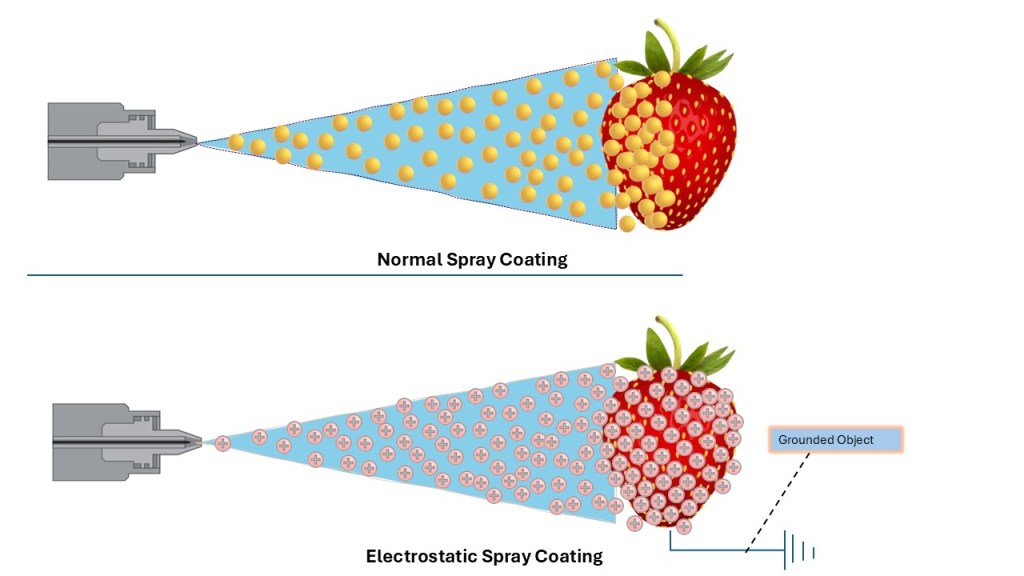
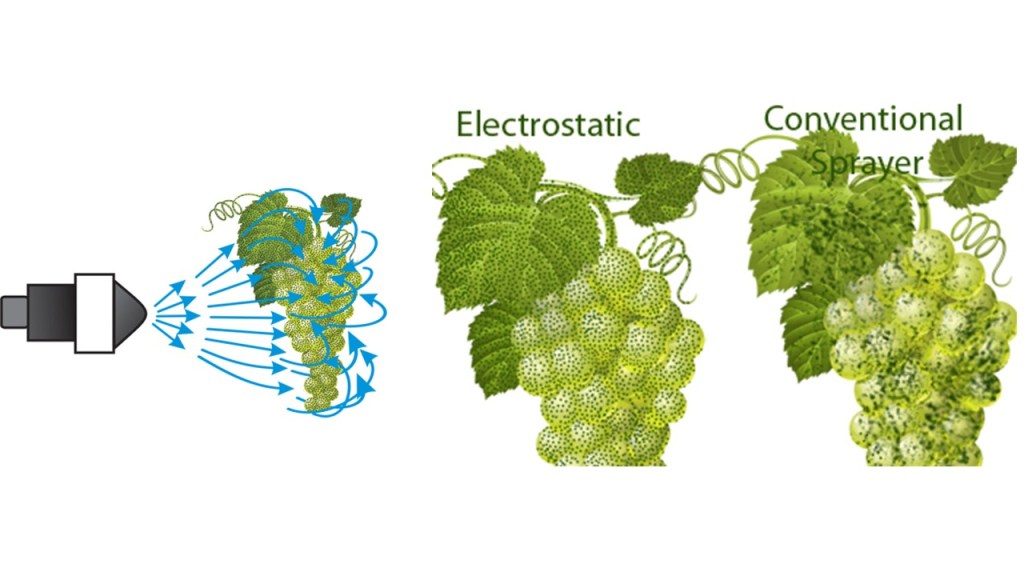
      Post-harvest losses of fruits are very high, as fruits are highly perishable due to their soft epicarp/exocarp, making them highly susceptible to mechanical damage and post-harvest microbial spoilage, resulting in significant losses. Normally, the shelf life of most fruits is about a week; for some, such as berries, it can be even shorter, just 2–3 days under normal or uncontrolled storage conditions. However, this shelf life can be extended by using edible coatings, which help prolong freshness during post-harvest handling, transportation, and storage (Kumar et al., 2018; Yadav et al., 2022). If fruits are not properly handled during transportation and storage, they may become unsuitable for consumption and marketability, leading to huge economic losses (Romero, 2019). In recent years, the application of biodegradable edible coatings (BECs) incorporated with essential oils, applied using electrostatic spraying techniques on fruit surfaces has emerged as an effective, economical, and environmentally friendly method for extending the shelf life of perishable fruits and vegetables (Maftoonazad and Ramaswamy, 2019).

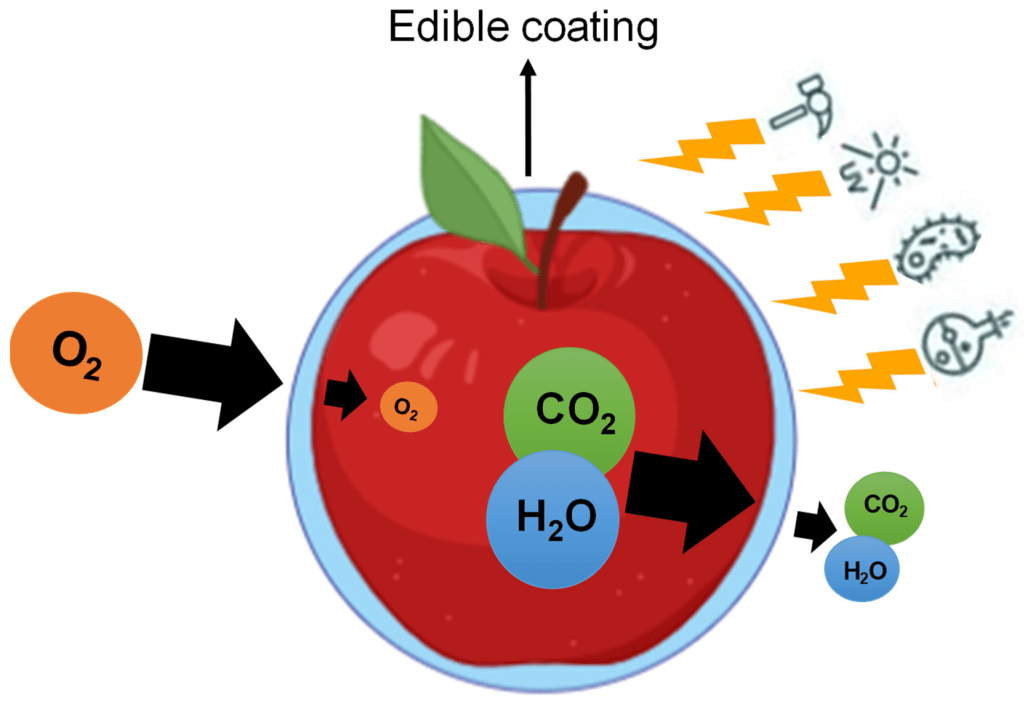
      BECs act as excellent barrier agents by creating a semipermeable protective layer between the fruit surface and the surrounding environment (oxygen and carbon dioxide), thereby helping to lower the respiration rate and ethylene biosynthesis, ultimately delaying fruit ripening and associated biochemical changes. Similarly, the structural integrity of various forms of alginic acid salts, such as sodium alginate, calcium alginate, magnesium alginate, and potassium alginate, protects fruits against mechanical, physical, biochemical, and biological influences during post-harvest handling, transportation, and storage. This minimises quality loss and enhances the marketability of fruits (García et al., 2016; Tokatlı and Demirdöven, 2020; Vieira et al., 2021).

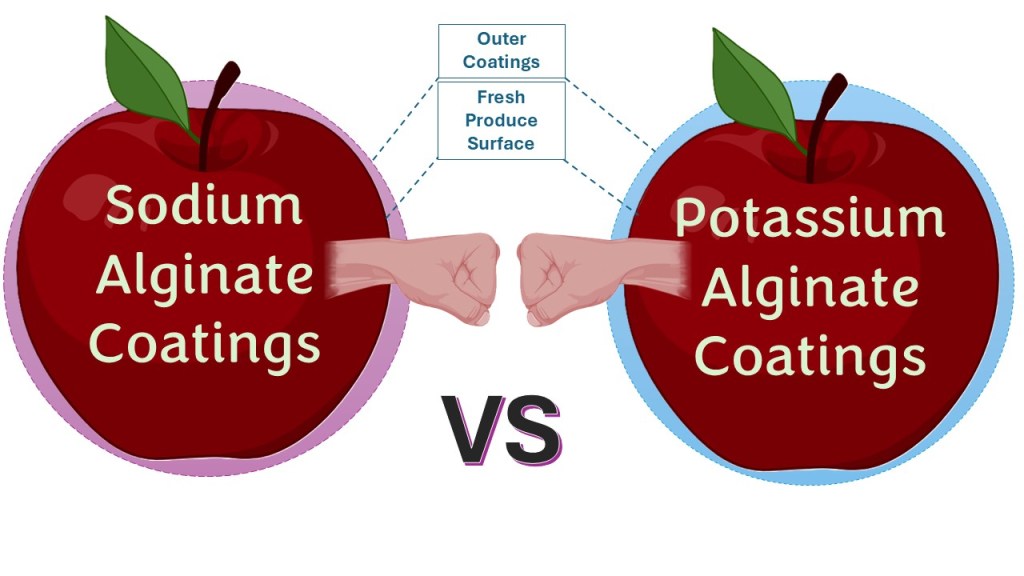
      However, the main objective of this study is to explore the use of potassium alginate as a substitute for sodium alginate in edible coatings. Both sodium and potassium belong to the same group in the periodic table (alkali metals) and possess similar chemical characteristics. At the same time, there is growing awareness of the need to reduce excessive sodium intake in human diets, while potassium, an essential mineral, plays a critical role in regulating vital bodily functions. Furthermore, potassium alginate, when combined with essential oils, holds great potential for enhancing the shelf life of fresh produce and could represent an innovative and eco-friendly solution for the food packaging industry.

      Kay Factors to consider before using BECs on fruits and vegetables.

      BECs, when applied directly to food surfaces, help mitigate environmental stressors (Eyiz et al., 2020). To be effective, these coatings must meet several essential criteria: they must be edible, biodegradable, environmentally sustainable, compatible with probiotics, and compliant with national food and environmental regulations (Chen et al., 2020; Abdel-Naeem et al., 2021).

      An ideal EC should serve multiple protective functions, including:

      • Acting as an effective barrier against gas and moisture exchange
      • Slowing fruit ripening and aging processes
      • Maintaining fruit appearance and shine
      • Providing mechanical stability
      • Preventing damage from pests and pathogens (Iñiguez-Moreno et al., 2021; Yadav et al., 2022).

      Additionally, high-quality BECs should effectively carry and sustain probiotic activity over extended periods (Marín et al., 2019). For example, Pereira et al. (2016) demonstrated that incorporating lactic acid bacteria (LAB) into whey protein-based edible films not only improved the films’ durability and strength but also maintained high LAB viability for 60 days under refrigeration.

      On top of that, one of the most important attributes of BECs is their ability to adhere uniformly to the surface of fruits, ensuring they function efficiently and effectively. In fact, the effectiveness, flexibility, adhesion, stability, and extensibility of BECs primarily depend on the presence of compounds such as emulsifiers, plasticisers, and functional compounds such as texture enhancers, antioxidants, antimicrobials, and nutraceuticals (Pereira et al., 2016; Pedreiro et al., 2021; Yadav et al., 2022). In fact, the quality of BECs is influenced not only by factors such as viscosity, pH, coating thickness, but also by the degree of polymer cross-linking (Iñiguez-Moreno et al., 2021). Generally, the outer skin (pericarp) of fruits or vegetables has a soft texture, making it highly susceptible to mechanical damage, especially during harvesting and all stages of postharvest handling. Meanwhile, injuries in fruits accelerate respiration rates, moisture loss, and ethylene biosynthesis, while also increasing spoilage, ultimately reducing shelf-life and fruit quality. Therefore, an effective BEC should have the ability to resist mechanical shocks and abrasion to help maintain the structural integrity of the fruit. Additionally, the coating material should not negatively affect the texture, taste, or sensory properties of the fruit, such as in the case of plums, and berries. Hence, a comprehensive understanding of the relationship between fruit physiology, biochemical composition, and edible coating properties is essential before selecting BECs (Saha et al., 2017; Strano et al., 2017; Yadav et al., 2022).

      Attributes Alginate-based edible coatings and their properties.

      Alginate films and coatings are biodegradable, biocompatible, and non-toxic film-forming bio-macromolecules that improve the quality attributes of processed foods and fresh produce by reducing oxidative rancidity, oil absorption, shrinkage, moisture loss, and preserving flavor and color (Nair et al., 2020; Chaudhary et al., 2020). It is a linear anionic copolymer naturally extracted from seaweed (Phaeophyceae). Alginate consists of biopolymeric α-L-Guluronic acid (G) and β-D-Mannuronic acid (M) polymers and possesses several properties, making it commonly used in various industries including scaffolding, welding rod production, dental applications, pharmaceuticals, cosmetics, agriculture, and food industries, therefore gaining increasing attention in daily life. It has been reported that the biocompatibility of M monomers is 10 times more immunogenic and more effective for promoting cytokine synthesis compared to G monomers (Axpe and Oyen, 2016; Reddy, 2021). Due to its excellent film-forming and gelling properties, it forms uniform, water-soluble, and transparent films, while also having lower permeability to fats, oils, and oxygen, which helps retard lipid oxidation in various fruits and vegetables (Xu et al., 2020; Pereira and Cotas, 2020; Nair et al., 2020).

      Properties of Alginic Acid and Its Salts

      Alginic acid exists in various forms, including its salts such as sodium, magnesium, potassium, calcium, and ammonium salts. Monovalent cation salts (e.g., sodium alginate, potassium alginate, and ammonium alginate) are soluble in both cold and hot water, whereas divalent cation salts (e.g., magnesium alginate and calcium alginate) are water-insoluble (McHugh, 2003; Parreidt et al., 2018). This difference arises from the presence of carboxylic (–COO⁻) groups in the alginate structure, which carry a negative charge and exhibit high affinity for divalent cations, forming strong, water-insoluble bonds. Consequently, divalent alginates possess remarkable water absorption capacity, capable of absorbing 200–300 times their original weight (Reddy, 2021).

      pH-Dependent Solubility and Viscosity of Alginate

      Alginate exhibits very low solubility at acidic pH levels due to the deprotonation of carboxylic groups (–COO⁻) in its structure. Studies indicate that alginate viscosity remains stable above pH 5 but decreases significantly below this threshold. This reduction occurs because protonation converts –COO⁻ groups into –COOH, promoting hydrogen bond formation between polymer chains in aqueous solutions, thereby lowering viscosity. Conversely, under highly alkaline conditions (pH > 11), alginate undergoes depolymerisation, leading to a notable decline in viscosity (Liu et al., 2002; Mahmoodi, 2013; Wang et al., 2017; Reddy, 2021).

      Mucoadhesive Properties of Alginate

      Alginate exhibits superior mucoadhesive strength compared to other polymers (e.g., chitosan, polystyrene, lactic acid, and carboxymethyl cellulose) due to the presence of anionic carboxylic groups (–COO⁻) in its structure, which enhance binding to mucosal layers. Polyanionic polymers like alginate generally demonstrate stronger bioadhesion than non-ionic or polycationic polymers. Consequently, alginate is widely utilised as an effective mucosal drug delivery vehicle, particularly for targeted drug release in the gastrointestinal tract and nasopharynx (Bernkop-Schnürch et al., 2001; Szekalska et al., 2017; Putri et al., 2021).

      Sodium Alginate: Properties and Applications

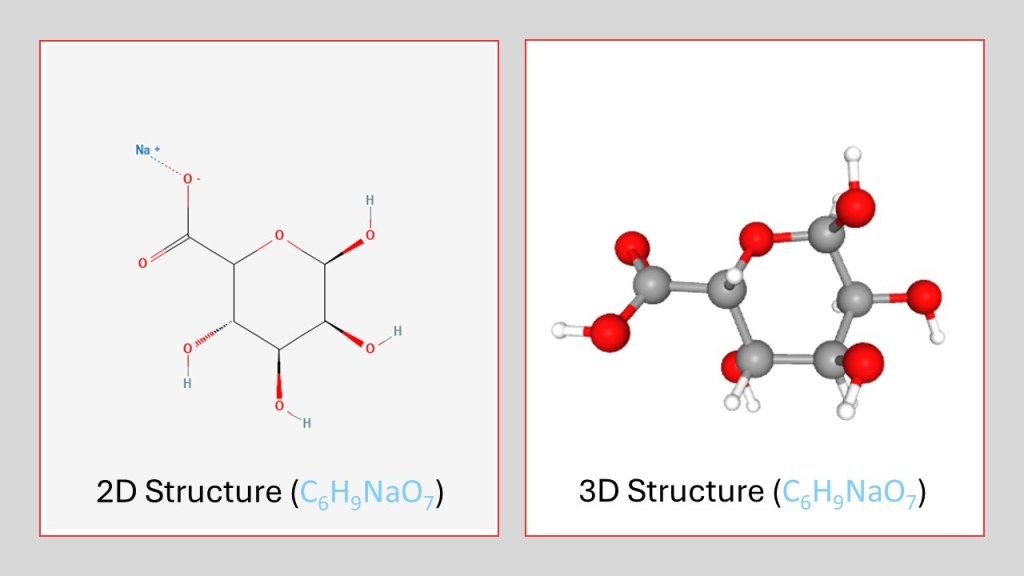
      Figure 2: 2D and 3D structure of sodium alginate (Image Source: NCBI, 2022).

      Sodium alginate (SA) is the sodium salt of alginic acid, containing between 30-60% alginic acid. It is a polysaccharide-based edible coating extracted from the cell wall of brown algae. SA is soluble in water and has been widely used in the food industry as a thickening, gelling, preservative, emulsifying, or stabilising agent, as well as a coating for fruits and vegetables (Puscaselu et al., 2020; Das et al., 2020). SA-based coatings can enhance the nutritional qualities of foods due to their mechanical, antimicrobial, and antioxidant properties (Nair et al., 2020). Sodium alginate-based films exhibit strong tensile strength and good antioxidant activities due to their strong intermolecular and intramolecular cross-linking interactions (Ruan et al., 2019; Nair et al., 2020). As a result, it has been used as an excellent film-forming agent to coat fresh produce due to its gelling ability, non-toxicity, pH responsiveness, biodegradability, and biocompatibility (Reddy, 2021).

      Its properties are almost identical to those of potassium alginate (PA) , and it can easily dissolve in both cold and warm water. However, both SA and PA acquire unique properties when mixed with divalent cations such as Ca²⁺, Sr²⁺, and Ba²⁺, which induce gelation that is insoluble in water. This occurs because the divalent cations bind with the G block (α-L-Guluronic acid). After gelation, a “egg-box” like structure forms, creating cross-linkages between the oxygen atoms of the G-block and the divalent cations. This structure helps maintain the structural integrity of the coatings, improves water absorption, and provides tensile strength (Moody et al., 2020; Cao et al., 2020; Pandey et al., 2021).

      While SA remains widely used in the food industry, PA offers distinct health advantages by replacing Na not only in diets but also in edible coatings that consumers ingest with fresh or cooked foods (Kimica, 2022). PA demonstrates higher Na⁺ adsorption capacity, promoting the excretion of excess Na that contributes to hypertension. Recent studies report that PA is rich in dietary fiber and effective in suppressing hypertension, thereby helping to lower blood pressure (Chen et al., 2010; Szekalska et al., 2016; Fujiwara et al., 2021).

      Potassium Alginate

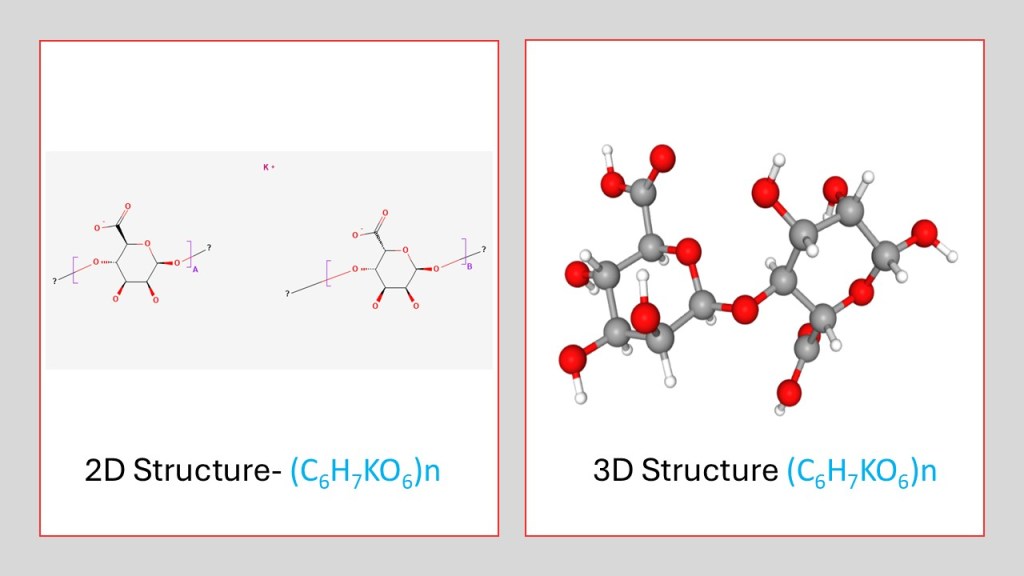
      Potassium alginate, a polysaccharide-based edible coating, acts as an excellent barrier by forming a semipermeable protective layer between the fruit’s surface and the surrounding environment (Oxygen and Carbon Dioxide). This layer helps reduce the respiration rate and ethylene biosynthesis, ultimately delaying fruit ripening and biochemical changes. Similarly, the structural integrity of various alginic acid salts, including sodium alginate, calcium alginate, magnesium alginate, and potassium alginate, protects fruits from mechanical, physical, biochemical, and biological damage during post-harvest handling, transportation, and storage. As a result, these coatings minimise quality loss and improve fruit marketability (García et al., 2016; Tokatlı and Demirdöven, 2020; Vieira et al., 2021).

      Figure 3: 2D and 3D structure of potassium alginate (Image Source: NCBI)                                  

      Applications and Benefits of Potassium Alginate

      Potassium alginate, a salt derived from alginic acid (seaweed extract), serves as a versatile biopolymer with wide-ranging applications in agriculture, food, and pharmaceutical industries. It functions as an effective stabiliser, emulsifier, thickener, and gelling agent, offering a potential alternative to sodium alginate. Currently, the demand for potassium alginate in food and pharmaceutical sectors surpasses that of sodium alginate due to health concerns associated with excessive sodium intake (Kimica, 2022). For example, The National Health Service Act 2006 (UK) recommends a daily intake of 3.5g potassium and limits sodium to 2.4g for adults.

      Beyond its technical uses, potassium alginate demonstrates significant health benefits:

      • Metabolic Health: Reduces blood cholesterol and glucose levels
      • Biocompatibility: Exhibits immunogenic properties suitable for pharmaceutical formulations
      • Cardiovascular Protection: Mitigates risks of renal and cardiac hypertrophy (Szekalska et al., 2016; Kimica, 2022).

      Regulatory Limits for Potassium Alginate (PA) in Food Products.

      According to the FAO database, the maximum permitted levels of PA vary significantly across different food product categories. The regulatory limits are established as follows: reduced-fat creams, plain fermented milks, frozen fish, and infant weaning foods may contain up to 5000 mg/kg of PA, while plain buttermilk has a higher permitted limit of 6000 mg/kg. More restrictive limits apply to pasteurised cream (100 mg/kg) and sugars/syrups including maple syrup and brown sugar (300 mg/kg). For pasteurized canned products, the maximum permitted PA level is set at 2500 mg/kg (FAO, 2001). These carefully differentiated regulatory thresholds reflect the varying applications and safety considerations for potassium alginate across different food types.

      Regulation (EC) No 1333/2008 of the European Parliament and of the Council of 16 December 2008 on food additives.

      Applications of Potassium Alginate in Different Fields

      Potassium alginate (E 402) is a natural polymer that is nearly odourless and appears as a fibrous or granular powder, ranging in colour from white to yellow. It shares many properties with sodium alginate and is often used as a substitute in food applications. Over the past few decades, PA has found wide application in the pharmaceutical industry, food industry, agricultural sector, and medical field due to its unique properties, including gelling, thickening, emulsifying, stabilising, and binding capabilities, as well as its bioactivity, biocompatibility, demulcent effects, and immunomodulatory action (Zakharov et al., 2021; Reddy, 2021).

      Potassium alginate in the food industry

      PA is authorised as a safe food additive by the FAO, WHO, and under Directive 95/2/EC (EFSA Panel on Additives and Products or Substances used in Animal Feed, 2017a), and therefore holds significant value in the production of functional food products (Qin et al., 2018). For example, alginate has been used in a variety of food items, including fruit jams, jellies, instant noodles, ice cream toppings, food packaging, dairy products, and beer (EFSA Panel on Additives and Products or Substances used in Animal Feed, 2017a).

      Shi et al. (2020) reported that the combined effect of using ultrasound at 15.6 W/cm² for 5 minutes with 0.4% potassium alginate marination on chicken breast meat resulted in average moisture loss, cooking loss, and shear force values of 1.29%, 16.53%, and 12.67 N, respectively. In contrast, the control treatment showed average values of approximately 3%, 24%, and 21 N, respectively. Similarly, the water-holding capacity of myofibrillar protein gel increased by 73.10% with potassium alginate marination compared to the control (66.44%). This improvement enhanced the textural properties, promoting good tenderness, preventing protein denaturation, avoiding off-flavors, and maintaining the appearance and eating quality traits of chicken (Shi et al., 2020). In another study evaluating the effect of PA (4 mg/mL) combined with ultrasound (300 W) on 300-day-old chicken breast meat, the treatment exhibited lower liquid loss, improved meat texture, and enhanced meat quality due to the dissociation of actomyosin in myofibrillar protein and reduced heat-denatured myosin protein. Thus, PA also shows great potential for improving chicken meat quality (Shi et al., 2021). According to the EFSA Panel on Additives and Products or Substances used in Animal Feed (2017b), potassium alginate (E 402) was listed as an ingredient on 41 food and beverage products, including food supplements, within the Mintel GNPD database during the 2011–2016 period. Margarines accounted for the majority of these products, indicating that this additive was most commonly used in this specific food category.

      In terms of edible coatings, Chandran et al. (2020) applied a PA-based coating (Aloe gel + 1% PA) to tomato (Solanum lycopersicum) fruits over 36 days, and noted that the coated fruits exhibited firmness values of approximately 108 N, 54 N, 54 N, and 44 N at 0, 12, 24, and 36 days, respectively. Similarly, the sensory and textural attributes of the tomatoes, including glossiness, juiciness, texture, skin roughness, and skin tightness, remained superior up to 12 days of storage before gradually declining afterward. Additionally, there were only slight changes in total solids content during the storage period, with measurements of 88 mg/L, 87 mg/L, 83.86 mg/L, and 84 mg/L at 0, 12, 24, and 36 days, respectively. Notably, no diseases such as bacterial soft rot, Rhizopus, or Erwinia (major post-harvest pathogens) were observed in the coated fruits, unlike in the uncoated ones.

      Potassium alginate in medical/ health field

      Consumption of PA could offers greater health benefits than SA, as over Na intake can elevate the risk of hypertension, heart disease, and stroke. In contrast, PA decomposes in the GI tract, producing alginic acid and potassium ions. The released alginic acid then binds with Na present in the digestive system, forming SA and thereby helping eliminate excess hypertension-inducing Na from the body (Fujiwara et al., 2021).

      For example, a study involving six hypertensive patients administered 45 g/day of alginic acid (containing 10% PA) for 5–9 weeks demonstrated that the treatment was well-tolerated, effectively managed electrolyte imbalances, and reduced gastrointestinal disturbances (EFSA Panel on Additives and Products or Substances used in Animal Feed, 2017b). Furthermore, Han et al. (2020) reported that potassium alginate oligosaccharides (PAO) can helps to reduce the risk of elevated systolic blood pressure (BP) and mean arterial pressure, thereby acting as an effective protective agent against heart failure. Additionally, PAO enhances microbial diversity in the digestive system by modulating gut microbiota (GM) composition. Specifically, it reduces the abundance of Phascolarctobacterium bacteria and Prevotella spp., suggesting a potential role in cardiovascular disease prevention.

      PA has also been widely used in medical applications, particularly for treating heavily exuding wounds, bleeding wounds, chronic wounds, and hollow organ wounds (e.g., intestinal wounds). Alginate-based hydrogels, including bioactivated nanocellulose-alginate hydrogels, have shown significant therapeutic potential (Solanki & Solanki, 2012; Leppiniemi et al., 2017). For example, hydrogels prepared under neutral or weakly acidic conditions (pH 5.5–6.5) using calcium carbonate, carbonated water, and potassium alginate are highly suitable for wound healing dressings. These hydrogels are biocompatible, transparent (allowing wound monitoring), and quick to prepare in clinical settings. Additionally, they effectively absorb and retain wound exudates by taking up physiological saline during in vivo application, enhancing their therapeutic utility (Teshima et al., 2020; Zhang & Zhao, 2020).

      Potassium Alginate in Animal Feed

      PA is used in animal feed and has been proven to be both safe and nutritious. For instance, a one-year study on a potassium alginate-based supplement fed to dogs, cats, and fish found it to be safe, with no adverse effects observed in any of the animals. The study concluded that a dose of 40,000 mg of potassium alginate salts per kg of complete feed is safe for dogs, cats, salmonids, and other fish, and does not pose any risk to the aquatic ecosystem (EFSA Panel on Additives and Products or Substances used in Animal Feed, 2017a).

      For more information: Commission Implementing Regulation (EU) 2018/1533.

      Conclusion and Future directions

      Alginate is one of the most widely used polysaccharide-based seaweed products, valued for its broad range of applications across various sectors. Its desirable properties, such as gel-forming ability through crosslinking, biodegradability, biocompatibility, pH-responsiveness, and non-toxicity, make it especially useful in the food industry. In addition, alginates are economical, readily available, and compatible with dietary preferences such as vegetarianism and veganism, making them ideal for modern food practices.

      Due to their ability to form stable structures when crosslinked with monovalent and divalent ions, alginates provide physical strength and resistance to both biotic and abiotic stress. This makes alginate-based coatings particularly effective for preserving fruits and vegetables post-harvest.

      Despite these advantages, most research has historically focused on SA and calcium alginate, while PA remains relatively understudied. This represents a missed opportunity, especially considering its nutritional edge. PA offers similar functional benefits to SA but is healthier from a dietary standpoint. The recommended daily intake of sodium is 2.4 g, whereas potassium is 3.5 g. While sodium is abundant in processed foods, snacks, and beverages, potassium sources are more limited in the typical diet. Therefore, promoting the use of PA in food products, particularly in edible coatings, not only meets functional needs but may also contribute to improved nutritional balance by helping address potassium deficiencies.

      Research Question:
      Given its comparable functional properties and superior health profile, can potassium alginate serve as a better alternative to sodium alginate in food applications such as edible coatings—enhancing product quality while supporting healthier dietary intake of essential minerals?

      References:

      Abdel-Naeem, H.H., Zayed, N.E. and Mansour, H.A. (2021). Effect of chitosan and lauric arginate edible coating on bacteriological quality, deterioration criteria, and sensory attributes of frozen stored chicken meat. LWT-Food Science and Technology, 150, p.111928. doi: https://doi.org/10.1016/j.lwt.2021.111928

      Axpe, E. and Oyen, M.L. (2016). Applications of alginate-based bioinks in 3D bioprinting. International journal of molecular sciences, 17(12), p.1976. doi: https://doi.org/10.3390/ijms17121976

      Bernkop-Schnürch, A., Kast, C.E. and Richter, M.F. (2001). Improvement in the mucoadhesive properties of alginate by the covalent attachment of cysteine. Journal of controlled release, 71(3), 277-285. doi: https://doi.org/10.1016/S0168-3659(01)00227-9

      Cao, L., Lu, W., Mata, A., Nishinari, K. and Fang, Y. (2020). Egg-box model-based gelation of alginate and pectin: A review. Carbohydrate polymers, 242, p.116389. doi: https://doi.org/10.1016/j.carbpol.2020.116389 

      Chandran, T.T., Mini, C. and Anith, K.N. (2020). Quality evaluation of edible film coated tomato (Solanum lycopersicum) fruits. Journal of Tropical Agriculture, 58(2), 219-227.

      Chaudhary, S., Kumar, S., Kumar, V. and Sharma, R. (2020). Chitosan nanoemulsions as advanced edible coatings for fruits and vegetables: Composition, fabrication and developments in last decade. International journal of biological macromolecules, 152, 154-170. doi: https://doi.org/10.1016/j.ijbiomac.2020.02.276

      Chen, Y.Y., Ji, W., Du, J.R., Yu, D.K., He, Y., Yu, C.X., Li, D.S., Zhao, C.Y. and Qiao, K.Y. (2010). Preventive effects of low molecular mass potassium alginate extracted from brown algae on DOCA salt-induced hypertension in rats. Biomedicine and pharmacotherapy, 64(4), 291-295. doi: https://doi.org/10.1016/j.biopha.2009.09.004

      Chen, F., Zhang, J., Chen, C., Kowaleguet, M.G., Ban, Z., Fei, L. and Xu, C. (2020). Chitosan-based layer-by-layer assembly: Towards application on quality maintenance of lemon fruits. Advances in Polymer Technology20, 1-10. doi: https://doi.org/10.1155/2020/7320137

      Das, S., Vishakha, K., Banerjee, S., Mondal, S. and Ganguli, A. (2020). Sodium alginate-based edible coating containing nanoemulsion of Citrus sinensis essential oil eradicates planktonic and sessile cells of food-borne pathogens and increased quality attributes of tomatoes. International Journal of Biological Macromolecules, 162, 1770-1779. doi: https://doi.org/10.1016/j.ijbiomac.2020.08.086

      EFSA Panel on Additives and Products or Substances used in Animal Feed, Rychen, G., Aquilina, G., Azimonti, G., Bampidis, V., Bastos, M.D.L., Bories, G., Chesson, A., Cocconcelli, P.S., Flachowsky, G. and Kolar, B. (2017a). Safety and efficacy of sodium and potassium alginate for pets, other non food‐producing animals and fish. EFSA Journal, 15(7), p.e04945. doi: https://doi.org/10.2903/j.efsa.2017.4945

      EFSA Panel on Additives and Products or Substances used in Animal Feed, Younes, M., Aggett, P., Aguilar, F., Crebelli, R., Filipič, M., Frutos, M.J., Galtier, P., Gott, D., Gundert-Remy, U., Kuhnle, G.G., Lambré, C., Leblanc, J.C., Lillegaard, I.T., Moldeus, P., Mortensen, A., Oskarsson, A., Stankovic, I., Waalkens-Berendsen, I., Woutersen, R.A., Wright, M., Brimer, L., Lindtner, O., Mosesso, P., Christodoulidou, A., Horváth, Z., Lodi, F., Dusemund, B. (2017b). Re-evaluation of alginic acid and its sodium, potassium, ammonium and calcium salts (E 400-E 404) as food additives. EFSA Journal, 15(11), p.e05049. doi: https://doi.org/10.2903/j.efsa.2017.5049

      Eyiz, V., Tontul, İ. and Türker, S. (2020). The effect of edible coatings on physical and chemical characteristics of fruit bars. Journal of Food Measurement and Characterization14, 1775-1783. https://doi.org/10.1007/s11694-020-00425-0

      FAO (2001). Potassium alginate. Available from: https://www.fao.org/3/y0474s/y0474s5d.htm#bm193 (Accessed 02 July 2022).

      Fujiwara, Y., Maeda, R., Takeshita, H. and Komohara, Y. (2021). Alginates as food ingredients absorb extra salt in sodium chloride-treated mice. Heliyon, 7(3), e06551. doi: https://doi.org/10.1016/j.heliyon.2021.e06551

      García, M.P.M., Gómez-Guillén, M.C., López-Caballero, M.E. and Barbosa-Cánovas, G.V. (2016). Edible films and coatings: fundamentals and applications, 1st ed.; CRC Press: Boca Raton, FL, USA, pp 585-587. https://doi.org/10.1201/9781315373713

      Han, Z.L., Chen, M., Fu, X.D., Yang, M., Hrmova, M., Zhao, Y.H. and Mou, H.J. (2021). Potassium alginate oligosaccharides alter gut microbiota, and have potential to prevent the development of hypertension and heart failure in spontaneously hypertensive rats. International journal of molecular sciences, 22(18), p.9823. doi: https://doi.org/10.3390/ijms22189823

      Iñiguez-Moreno, M., Ragazzo-Sánchez, J.A. and Calderón-Santoyo, M. (2021). An extensive review of natural polymers used as coatings for postharvest shelf-life extension: Trends and challenges. Polymers13, 1-31. doi: https://doi.org/10.3390/polym13193271

      Kimica (2022). Potassium Alginate. Available from: https://www.kimica-algin.com/products/KaAlgin/ (Accessed 23 June 2022).

      Leppiniemi, J., Lahtinen, P., Paajanen, A., Mahlberg, R., Metsä-Kortelainen, S., Pinomaa, T., Pajari, H., Vikholm-Lundin, I., Pursula, P. and Hytönen, V.P. (2017). 3D-printable bioactivated nanocellulose–alginate hydrogels. ACS applied materials & interfaces, 9(26), 21959-21970. doi: https://doi.org/10.1021/acsami.7b02756

      Liu, X.D., Yu, W.Y., Zhang, Y., Xue, W.M., Yu, W.T., Xiong, Y., Ma, X.J., Chen, Y. and Yuan, Q. (2002). Characterization of structure and diffusion behaviour of Ca-alginate beads prepared with external or internal calcium sources. Journal of microencapsulation, 19(6), 775-782. doi: https://doi.org/10.1080/0265204021000022743 

      Maftoonazad, N. and Ramaswamy, H.S. (2019). Application and evaluation of a pectin-based edible coating process for quality change kinetics and shelf-life extension of lime fruit (Citrus aurantifolium). Coatings9, 1-14. doi: https://doi.org/10.3390/coatings9050285

      Mahmoodi, N.M. (2013). Magnetic ferrite nanoparticle–alginate composite: Synthesis, characterization and binary system dye removal. Journal of the Taiwan Institute of Chemical Engineers, 44(2), 322-330. doi: https://doi.org/10.1016/j.jtice.2012.11.014 

      Marín, A., Plotto, A., Atarés, L. and Chiralt, A. (2019). Lactic acid bacteria incorporated into edible coatings to control fungal growth and maintain postharvest quality of grapes. Hortscience54, 337-343. doi: https://doi.org/10.21273/HORTSCI13661-18 

      McHugh, D.J. (2003). A guide to the seaweed industry. Food and agriculture organization fisheries technical paper 441. Available from: https://www.fao.org/3/y4765e/y4765e08.htm#bm08 (Accesses: 23 June 2022)

      Moody, C.T., Palvai, S. and Brudno, Y. (2020). Click cross-linking improves retention and targeting of refillable alginate depots. Acta biomaterialia, 112, 112-121. doi: https://doi.org/10.1016/j.actbio.2020.05.033 

      Nair, M.S., Tomar, M., Punia, S., Kukula-Koch, W. and Kumar, M. (2020). Enhancing the functionality of chitosan-and alginate-based active edible coatings/films for the preservation of fruits and vegetables: A review. International Journal of Biological Macromolecules, 164, 304-320. doi: https://doi.org/10.1016/j.ijbiomac.2020.07.083  

      Pandey, A.K., Sirohi, R., Gaur, V.K. and Pandey, A. (2021). Production and applications of pullulan. In Biomass, Biofuels, Biochemicals (pp. 165-221). Elsevier. doi: https://doi.org/10.1016/B978-0-12-821888-4.00018-6

      Parreidt, T.S., Müller, K. and Schmid, M. (2018). Alginate-based edible films and coatings for food packaging applications. Foods, 7(10), 1-38. doi: https://doi.org/10.3390/foods7100170

      Pedreiro, S., Figueirinha, A., Silva, A.S. and Ramos, F. (2021). Bioactive Edible Films and Coatings Based in Gums and Starch: Phenolic Enrichment and Foods Application. Coatings, 11, p.1393. doi: https://doi.org/10.3390/coatings11111393

      Pereira, J.O., Soares, J., Sousa, S., Madureira, A.R., Gomes, A. and Pintado, M. (2016). Edible films as carrier for lactic acid bacteria. LWT-Food Science and Technology73, 543-550. doi: https://doi.org/10.1016/j.lwt.2016.06.060

      Pereira, L. and Cotas, J. (2020). Introductory chapter: Alginates-A general overview. Alginates-recent uses of this natural polymer. IntechOpen, London. doi: https://doi.org/10.5772/intechopen.88381 

      Puscaselu, R.G., Lobiuc, A., Dimian, M. and Covasa, M. (2020). Alginate: From food industry to biomedical applications and management of metabolic disorders. Polymers, 12(10), 1-28. doi: https://doi.org/10.3390/polym12102417 

      Putri, A.P., Picchioni, F., Harjanto, S. and Chalid, M. (2021). Alginate modification and lectin-conjugation approach to synthesize the mucoadhesive matrix. Applied Sciences, 11(24), p.11818. doi: https://doi.org/10.3390/app112411818 

      Qin, Y., Jiang, J., Zhao, L., Zhang, J. and Wang, F. (2018). Applications of alginate as a functional food ingredient. In Biopolymers for food design. Handbook of Food Bioengineering (pp. 409-429). Academic Press. doi: https://doi.org/10.1016/B978-0-12-811449-0.00013-X

      Reddy, S.G. (2021). ‘Alginates – A Seaweed Product: Its Properties and Applications’, in I. Deniz, E. Imamoglu, T. Keskin-Gundogdu (eds.), Properties and Applications of Alginates, IntechOpen, London. doi: https://doi.org/10.5772/intechopen.98831

      Ruan, C., Zhang, Y., Wang, J., Sun, Y., Gao, X., Xiong, G. and Liang, J. (2019). Preparation and antioxidant activity of sodium alginate and carboxymethyl cellulose edible films with epigallocatechin gallate. International journal of biological macromolecules, 134, 1038-1044. doi: https://doi.org/10.1016/j.ijbiomac.2019.05.143 

      Saha, A., Tyagi, S., Gupta, R.K. and Tyagi, Y.K. (2017). Natural gums of plant origin as edible coatings for food industry applications. Critical reviews in biotechnology, 37(8), 959-973. doi: https://doi.org/10.1080/07388551.2017.1286449

      Shi, H., Zhang, X., Chen, X., Fang, R., Zou, Y., Wang, D. and Xu, W. (2020). How ultrasound combined with potassium alginate marination tenderizes old chicken breast meat: Possible mechanisms from tissue to protein. Food Chemistry, 328, p.127144. doi: https://doi.org/10.1016/j.foodchem.2020.127144  

      Shi, H., Zhou, T., Wang, X., Zou, Y., Wang, D. and Xu, W. (2021). Effects of the structure and gel properties of myofibrillar protein on chicken breast quality treated with ultrasound-assisted potassium alginate. Food Chemistry, 358, p.129873. doi: https://doi.org/10.1016/j.foodchem.2021.129873 

      Solanki, G. and Solanki, R., 2012. Alginate Dressings, an Overview. International Journal of Biomedical Research, 3(1), 24-28.

      Strano, M.C., Altieri, G., Admane, N., Genovese, F. and Di Renzo, G.C. (2017). Advance in citrus postharvest management: diseases, cold storage and quality evaluation. Citrus pathology, 10, 139-159. doi: http://dx.doi.org/10.5772/66518

      Szekalska, M., Puciłowska, A., Szymańska, E., Ciosek, P. and Winnicka, K. (2016). Alginate: current use and future perspectives in pharmaceutical and biomedical applications. International Journal of Polymer Science, 1-17. doi: https://doi.org/10.1155/2016/7697031

      Szekalska, M., Sosnowska, K., Zakrzeska, A., Kasacka, I., Lewandowska, A. and Winnicka, K. (2017). The influence of chitosan cross-linking on the properties of alginate microparticles with metformin hydrochloride—In vitro and in vivo evaluation. Molecules, 22(1), p.182. doi: https://doi.org/10.3390/molecules22010182  

      Teshima, R., Kawano, Y., Hanawa, T. and Kikuchi, A. (2020). Preparation and evaluation of physicochemical properties of novel alkaline calcium alginate hydrogels with carbonated water. Polymers for Advanced Technologies, 31(12), 3032-3038. doi: https://doi.org/10.1002/pat.5027

      The National Health Service Act 2006. Salt: The Facts. How much salt? Available from: https://www.nhs.uk/live-well/eat-well/food-types/salt-nutrition/ (Accesses 26 June 2022).

      Tokatlı, K. and Demirdöven, A. (2020). Effects of chitosan edible film coatings on the physicochemical and microbiological qualities of sweet cherry (Prunus avium L.). Scientia Horticulturae, 259, 1-7. doi: https://doi.org/10.1016/j.scienta.2019.108656

      Vieira, T.M., Moldão-Martins, M. and Alves, V.D. (2021). Composite coatings of chitosan and alginate emulsions with olive oil to enhance postharvest quality and shelf life of fresh figs (Ficus carica L. cv.‘Pingo De Mel’). Foods, 10(4), p.718. doi: https://doi.org/10.3390/foods10040718

      Wang, S., Vincent, T., Roux, J.C., Faur, C. and Guibal, E. (2017). Pd (II) and Pt (IV) sorption using alginate and algal-based beads. Chemical Engineering Journal, 313, 567-579. doi: https://doi.org/10.1016/j.cej.2016.12.039

      Xu, L., Zhang, B., Qin, Y., Li, F., Yang, S., Lu, P., Wang, L. and Fan, J. (2020). Preparation and characterization of antifungal coating films composed of sodium alginate and cyclolipopeptides produced by Bacillus subtilis. International journal of biological macromolecules, 143, 602-609. https://doi.org/10.1016/j.ijbiomac.2019.12.051 

      Yadav, A., Kumar, N., Upadhyay, A., Sethi, S. and Singh, A. (2022). Edible coating as postharvest management strategy for shelf‐life extension of fresh tomato (Solanum lycopersicum L.): An overview. Journal of Food Science, 1-35. doi: https://doi.org/10.1111/1750-3841.16145

      Zakharov, N.A., Koval, E.M., Aliev, A.D., Shelekhov, E.V., Kiselev, M.R., Matveev, V.V., Orlov, M.A., Demina, L.I., Zakharova, T.V. and Kuznetsov, N.T. (2021). Calcium Hydroxyapatite/Potassium Alginate Organomineral Composites: Synthesis and Properties. Russian Journal of Inorganic Chemistry, 66(3), 305-312. doi: https://doi.org/10.1134/S0036023621030219  

      Zhang, M. and Zhao, X. (2020). Alginate hydrogel dressings for advanced wound management. International Journal of Biological Macromolecules, 162, 1414-1428. doi: https://doi.org/10.1016/j.ijbiomac.2020.07.311

      NextGen AgriFood Insights

    • Post-harvest losses of fruits and vegetables are high due to their perishable nature. Their soft epicarp/exocarp makes them highly susceptible to mechanical damage and microbial spoilage, leading to significant losses. Typically, the shelf life of most fruits is about a week, with some, like berries, lasting only 2–3 days under normal or uncontrolled storage conditions. Edible coatings, on the other hand, can extend the shelf life of fruits during post-harvest handling, transportation, storage, and selling (Yadav et al., 2022). Moreover, improper handling during harvesting, transportation, and storage can render the fruits unsuitable for consumption due to damage, which may ultimately affect their shelf life, organoleptic properties, and marketability, resulting in substantial economic losses and exacerbating the issue of food waste.

      Figure 1: Key Functions of Edible Coatings on Fresh Produce (Source: de Oliveira Filho et al., 2021).

      To address this issue, the use of edible coatings (Table 1) in the agro-food industry can help mitigate rapid post-harvest spoilage in fruits and vegetables. These coatings have the potential to improve the shelf life of fresh produce, as they act as effective barrier agents by forming a semipermeable protective layer between the fruit’s surface and the surrounding environment (oxygen and carbon dioxide), as illustrated in Figure 1. In fact, coatings on fresh produce can lower the respiration rate and ethylene biosynthesis, ultimately delaying the fruit’s ripening and biochemical changes. Additionally, the structural integrity of various alginic acid salts, such as sodium alginate, calcium alginate, magnesium alginate, and potassium alginate, protects fruits from mechanical, physical, biochemical, and biological influences during post-harvest handling, transportation, and storage. This minimises quality loss and improves the marketability of the fruits (García et al., 2016; Vieira et al., 2021).

      In recent years, the use of biodegradable edible coatings (BECs) combined with electrostatic spraying techniques has proven to be an effective, economical, and environmentally friendly method for prolonging the shelf life of perishable fruits and vegetables (Maftoonazad and Ramaswamy, 2019).

      Electrostatic spray coatings on Fresh Produce

      Electrostatic coating (EC) is an emerging technology in the food and agricultural industries for applying edible coatings to fruits and vegetables. This method offers a simple, rapid, and efficient application process, ensuring uniform distribution and durable, smooth coatings on produce surfaces (Deveau, 2018). EC is versatile, compatible with both powdered and liquid coatings, and effectively preserves the quality of fresh and processed foods, including appearance, shelf life, taste, flavor, and aroma. Its applications extend across multiple food sectors, such as confectionery, bakery, cheese, and meat processing (Barringer and Sumonsiri, 2015). The difference between normal and electrostatic spray coating is shown in Figure 2.

      Figure 2: Comparison of Uniformity Between Normal and Electrostatic Spray Coating.

      In fact, the EC operates on the principle of “opposite attraction.” First, an edible coating solution is prepared and combined with high-pressure air before passing through a revolving spray nozzle. Inside the nozzle, droplets are atomised and pass through an electrode, which induces either a positive or negative charge, depending on the polarity of the DC power supply, onto the droplets. These charged droplets are then carried by air streams, following electrical field lines toward the oppositely charged surface of the fruit. The charged droplets, either negatively or positively charged depending on the polarity, are carried by air streams along the electrical field lines towards the fruit, maintaining their charge.

      Figure 3: A schematic diagram of electrostatic spraying machine used for fruits coating (Adapted from Tathastu, 2022).

      The electrostatic force of attraction, approximately 60 times stronger than gravity, allows the droplets to move upwards against gravity, coating the fruit and covering all surfaces, including hidden areas, within a minute (Barringer and Sumonsiri, 2015; Ghaster, 2016; Tathastu, 2022). The average diameter of droplets produced by electrostatic spraying is around 50 µm, depending on factors such as the charging voltage, nozzle properties, airflow speed, liquid flow rate, and the distance between the nozzle tip and electrode (Deveau, 2018; Tathastu, 2022). Due to the strong electrostatic forces, the droplets adhere uniformly, even reaching hidden or curved surfaces (Figure 3). In advanced applications, edible coatings can also be applied using layer-by-layer electrostatic deposition, where oppositely charged biopolymers (such as positively charged chitosan and negatively charged alginate or pectin) are alternately deposited to form multilayer coatings. This approach allows precise control over coating properties and has been shown to enhance microbial stability, reduce moisture loss, and significantly extend shelf-life without additional active agents (Arnon et al., 2015).

      Electrostatic spraying (ES) uses electrostatic forces to atomise liquid into fine droplets. A typical ES device includes a pump, nozzle, high-voltage power supply, and grounded collector (Figure 4a). Liquid is fed through a capillary where it forms a charged droplet that develops into a Taylor cone. A high-charge-density jet emerges, breaking into smaller droplets as it nears the Rayleigh limit. This disintegration process repeats as the droplets lose charge and mass (Gui et al., 2023).

      Figure 4 (a) Schematic representation of electrospinning technology; (b) Key factors influencing the electrospinning process (Source: Gui et al., 2023).

      The ES effect is influenced by operational parameters (voltage, flow rate, nozzle–collector distance), liquid properties (surface tension, conductivity, polymer traits), and environmental factors (temperature, humidity, pressure) (Figure 4b).

      Furthermore, electrostatic spray coating offers better uniformity than traditional spraying methods, providing uniform surface coverage with a consistent film thickness of 50±5 μm, as opposed to normal spraying, which results in uneven distribution (40-60% coverage) and varying thickness (20-100 μm) due to gravity and droplet coalescence. In this system, a liquid is dispersed into droplets ranging from 0.1 to 1,000 μm, with the droplets forming due to electrostatic forces charging the liquid surface (Barringer and Sumonsiri, 2015). EC offers several advantages, including cost-effectiveness due to material, time, and labor savings. It provides a uniform deposit on target surfaces with even-sized, high-quality droplets, thereby extending the shelf life of foods (Tathastu, 2022). The advantage of electrostatic coating is its ability to produce fine droplets with minimal energy, preventing coalescence due to the droplets’ same charge polarity. The coating’s effectiveness improves as powder particle size decreases, cohesiveness and resistivity increase, and targets have higher water activity, lower resistivity, and shorter charge decay times. These factors influence the transfer efficiency, adhesion, dust, evenness, and functionality of the coating, which are essential for predicting coating performance in food production and selecting the best system for coating food products.

      Peretto et al. (2017) reported that alginate-based coatings applied via ES significantly prolonged the shelf life of strawberries compared to non-electrostatic spraying (NES). For instance, visual decay was absent in ES-coated strawberries up to 10 days, whereas NES-coated fruits showed about 3% decay. Similarly, color parameters (L, a, b) were 25.18, 27.44, and 15.41 for ES-coated fruits, compared to 27.10, 25.34, and 13.71 for NES-coated fruits. The firmness of ES-coated fruits was also higher, around 2.5 N, compared to 2 N for NES-coated fruits.

      Electrostatic spraying on fresh fruits and vegetables not only ensures food safety but also significantly reduces the public health burden associated with fresh produce. For example, Ganesh et al. (2012) demonstrated that electrostatic spraying of a combined malic acid and lactic acid solution (3% each) on spinach and iceberg lettuce inhibited Escherichia coli by 4.0 and 2.5 log CFU/g, respectively, compared to 5.9 log CFU/g in the control during 15 days of storage at 4°C. Jiang et al. (2020) used electrostatic coating technology with chitosan and evaluated the shelf-life parameters over 15 days of storage at 4°C. They found that coatings with 61 kilodaltons (kDa) were the most effective, with weight loss, firmness loss, decrease in flavonoids, and mold growth measuring 5.28%, 17.97%, 18.24%, and 5.8 log CFU, respectively, for coated samples, compared to 6.5%, 49.47%, 40.18%, and 6.65 log CFU for uncoated strawberries. Similarly, Jiang et al. (2019) found that chitosan-based edible coatings applied via electrostatic spraying formed a continuous, smooth, and uniform protective layer, in contrast to conventional spraying (CS). ES chitosan coatings extended the shelf-life of strawberries by at least 2 days compared to CS. With an 88.1% deacetylation degree, ES chitosan coatings show great potential for industrial applications in fresh produce, offering a safe, economical, and efficient technique (Jiang et al., 2019).

      Common biopolymers used in food and agricultural applications originate from plant, animal, and microbial sources (Table 1). Among these, plant-derived biopolymers are generally preferred due to their cost-effectiveness, widespread availability, and compatibility with vegetarian and vegan dietary practices. The most commercially prevalent bio-based edible coatings include lipid-based formulations, polysaccharides, plant-derived gums, and resins (Guimaraes et al., 2018).

      Table 1: Classification of Edible Coatings for Food Preservation.

      CategoryTypeExamplesKey PropertiesCommon Applications
      Polysaccharide-BasedCellulose derivativesMethylcellulose, HPMC, CarboxymethylcelluloseWater-soluble, moderate barrier to O₂/CO₂Fruits (apples, pears), baked goods
      ChitosanCrab/fungal-derived chitosanAntimicrobial, biodegradable, enhances shelf lifeBerries, seafood, meat products
      StarchCorn, potato, tapioca starchLow cost, good film-forming but hydrophilicFresh-cut vegetables, nuts
      AlginateSodium alginate (from seaweed)High moisture retention, forms gels with Ca²⁺Citrus fruits, meat coatings
      Protein-BasedAnimal proteinsWhey, casein, gelatin, collagenExcellent O₂ barrier, elastic but water-sensitiveCheese, sausages, processed meats
      Plant proteinsSoy protein, corn zein, wheat glutenHeat-stable, moderate moisture barrierCereals, snacks, fried foods
      Lipid-BasedWaxesCarnauba wax, beeswax, candelilla waxSuperior water barrier, glossy finishCitrus fruits, cucumbers, avocados
      Fatty acidsStearic acid, oleic acidHydrophobic, reduces water lossNuts, dried fruits
      CompositePolysaccharide-LipidChitosan-beeswax, starch-palmitic acidCombines gas barrier (polysaccharide) + moisture resistance (lipid)Fresh-cut produce, ready-to-eat meals
      Protein-PolysaccharideWhey-alginate, gelatin-pectinEnhanced mechanical strength and functionalityMeat, fish, delicate fruits
      Active CoatingsAntimicrobialChitosan + thyme oil, silver nanoparticlesInhibits mould/bacterial growth (e.g., BotrytisE. coli)Perishable fruits, poultry
      AntioxidantVitamin E, tocopherols, polyphenol-infusedDelays oxidative rancidity and browningNuts, sliced fruits, processed meats
      Smart CoatingspH-responsiveAnthocyanin-based colour indicatorsVisual spoilage detection (colour change at specific pH)Packaged seafood, dairy
      Temperature-sensitiveThermo-releasing antimicrobials (e.g., encapsulated citral)Releases active compounds at target temperaturesReady-to-eat meals

      Source: (Han, 2005; Embuscado and Huber, 2009; Dhall, 2013; Ahiduzzaman, 2022).

      In conclusion, EC technology offers a highly effective, cost-efficient, and environmentally friendly solution for extending the shelf-life of perishable fruits and vegetables. By creating uniform coatings that reduce respiration, water loss, and microbial growth, EC significantly improves food safety and quality. Studies demonstrate that electrostatic spraying enhances the preservation of fruits like strawberries, apple, citrus reducing spoilage, maintaining firmness, glossiness, and minimising spoilage. With its potential to apply both liquid and powder coatings seamlessly, EC is an innovative method that can benefit the agricultural and food industries by reducing post-harvest losses and ensuring safer, longer-lasting produce.

      References:

      Ahiduzzaman, M. ed. (2022). Postharvest Technology: Recent Advances, New Perspectives and Applications. https://doi.org/10.5772/intechopen.101283

      Arnon, H., Granit, R., Porat, R. and Poverenov, E. (2015). Development of polysaccharides-based edible coatings for citrus fruits: A layer-by-layer approach. Food chemistry166, pp.465-472. https://doi.org/10.1016/j.foodchem.2014.06.061

      Barringer, S.A. and Sumonsiri, N. (2015). Electrostatic coating technologies for food processing. Annual Review of Food Science and Technology6(1), pp.157-169. https://doi.org/10.1146/annurev-food-022814-015526 

      de Oliveira Filho, J.G., Miranda, M., Ferreira, M.D. and Plotto, A. (2021). Nanoemulsions as edible coatings: A potential strategy for fresh fruits and vegetables preservation. Foods10(10), p.2438. https://doi.org/10.3390/foods10102438

      Deveau, J. (2018). Electrostatic Spraying in Agriculture. Available from: https://sprayers101.com/electrostatic/ (Accessed 27 March 2025).

      Dhall, R.K. (2013). Advances in edible coatings for fresh fruits and vegetables: a review. Critical reviews in food science and nutrition53(5), pp.435-450. http://dx.doi.org/10.1080/10408398.2010.541568

      Embuscado, M.E. and Huber, K.C. (2009). Edible films and coatings for food applications (Vol. 9, pp. 169-208). New York, NY, USA:: Springer. https://doi.org/10.1007/978-0-387-92824-1

      Ganesh, V., Hettiarachchy, N.S., Griffis, C.L., Martin, E.M. and Ricke, S.C. (2012). Electrostatic spraying of food‐grade organic and inorganic acids and plant extracts to decontaminate Escherichia coli O157: H7 on spinach and iceberg lettuce. Journal of Food Science, 77(7), M391-M396. https://doi.org/10.1111/j.1750-3841.2012.02719.x

      García, M.P.M., Gómez-Guillén, M.C., López-Caballero, M.E. and Barbosa-Cánovas, G.V. (2016). Edible films and coatings: fundamentals and applications, 1st ed.; CRC Press: Boca Raton, FL, USA, pp 585-587. https://doi.org/10.1201/9781315373713

      Ghaster, K. (2016). What Electrostatic Painting is and Why it Works so Well? Available From: https://www.ghasterpaintinginc.com/blog/what-electrostatic-painting-is-and-why-it-works-so-well/  (Accessed 27 March 2025).

      Gui, X., Shang, B. and Yu, Y. (2023). Applications of electrostatic spray technology in food preservation. LWT190, p.115568. https://doi.org/10.1016/j.lwt.2023.115568

      Guimaraes, A., Abrunhosa, L., Pastrana, L.M. and Cerqueira, M.A. (2018). Edible films and coatings as carriers of living microorganisms: A new strategy towards biopreservation and healthier foods. Comprehensive Reviews in Food Science and Food Safety17, 594-614. https://doi.org/10.1111/1541-4337.12345

      Han, J.H. ed. (2005). Innovations in food packaging. Elsevier. https://doi.org/10.1016/C2011-0-06876-X

      Jiang, Y., Yu, L., Hu, Y., Zhu, Z., Zhuang, C., Zhao, Y. and Zhong, Y. (2019). Electrostatic spraying of chitosan coating with different deacetylation degree for strawberry preservation. International journal of biological macromolecules, 139, 1232-1238. https://doi.org/10.1016/j.ijbiomac.2019.08.113

      Jiang, Y., Yu, L., Hu, Y., Zhu, Z., Zhuang, C., Zhao, Y. and Zhong, Y. (2020). The preservation performance of chitosan coating with different molecular weight on strawberry using electrostatic spraying technique. International journal of biological macromolecules, 151, 278-285. https://doi.org/10.1016/j.ijbiomac.2020.02.169

      Maftoonazad, N. and Ramaswamy, H.S. (2019). Application and evaluation of a pectin-based edible coating process for quality change kinetics and shelf-life extension of lime fruit (Citrus aurantifolium). Coatings9, 1-14. https://doi.org/10.3390/coatings9050285

      Peretto, G., Du, W.X., Avena-Bustillos, R.J., Berrios, D.J., Sambo, P. and McHugh, T.H. (2017). Electrostatic and conventional spraying of alginate-based edible coating with natural antimicrobials for preserving fresh strawberry quality. Food and Bioprocess Technology, 10(1), 165-174. https://doi.org/10.1007/s11947-016-1808-9

      Tathastu (2022). Electrostatic Agriculture Backpack Sprayer. Available from: https://tathastuservices.com/ele_agriculture_sprayer_backpack_model.html (Accessed 27 March 2025).

      Vieira, T.M., Moldão-Martins, M. and Alves, V.D. (2021). Composite coatings of chitosan and alginate emulsions with olive oil to enhance postharvest quality and shelf life of fresh figs (Ficus carica L. cv.‘Pingo De Mel’). Foods, 10(4), p.718. https://doi.org/10.3390/foods10040718

      Yadav, A., Kumar, N., Upadhyay, A., Sethi, S. and Singh, A. (2022). Edible coating as postharvest management strategy for shelf‐life extension of fresh tomato (Solanum lycopersicum L.): An overview. Journal of Food Science, 1-35. https://doi.org/10.1111/1750-3841.16145

      • Around 300–400 fungal species produce mycotoxins, which are toxic metabolites that contaminate agricultural products and pose significant health risks to livestock, poultry, and humans, even at extremely low concentrations (Latham, 2023). Among them, aflatoxins produced by Aspergillus species (Figure 1) are particularly dangerous, contaminating cereals, oilseeds, spices, and nuts during both cultivation and storage. Aflatoxins, highly toxic secondary metabolites produced by certain Aspergillus species, rank among the top five agriculturally significant mycotoxins. These toxins primarily contaminate cereals, oilseeds, spices, and nuts during both field cultivation and storage. Among the 13 naturally occurring aflatoxins, types B1, B2, G1, and G2 are the most potent. Aflatoxin M1 and M2, derivatives of B1 and B2, can even seep into the milk of animals consuming contaminated feed, posing severe health risks such as liver cancer in vertebrates. The production of aflatoxins is regulated by a complex genetic pathway, primarily involving the aflR gene, along with other genes like aflSaflP, and aflQ. Interestingly, not all Aspergillus species carrying these genes produce aflatoxins, highlighting the intricate genetic and evolutionary dynamics of these fungi (Sharma et al., 2025).

        Figure 1. The morphological variations of Aspergillus species, including uniseriate or biseriate arrangements (Sharma et al., 2025).

        Health Impacts of Aflatoxin Exposure

        Acute exposure to high aflatoxin concentrations can trigger severe, life-threatening conditions including sudden liver failure (Fulminant hepatic necrosis) and rapid skeletal muscle breakdown (Rhabdomyolysis). However, the greater public health concern lies in chronic low-level exposure, which frequently leads to progressive liver damage. Over time, this manifests as liver cirrhosis and often develops into hepatocellular carcinoma, with emerging evidence linking prolonged exposure to gallbladder carcinoma as well. Emerging research reveals that aflatoxin exposure in children has particularly devastating consequences, including significant growth stunting, impaired nutrient absorption leading to multiple deficiencies, cognitive and developmental delays, and compromised immune function. As potent hepatotoxins, aflatoxins primarily attack the liver, with early toxicity symptoms appearing as nonspecific complaints like fever, fatigue, and loss of appetite that progress to abdominal pain, vomiting, and hepatitis. The insidious nature of chronic exposure proves far more dangerous due to its immunosuppressive and carcinogenic effects (Kumar et al., 2017; Dhakal et al., 2023)

        Global occurrence and distribution of Aspergillus species.

        The expression of the aflatoxin biosynthesis gene cluster is influenced by both intrinsic and extrinsic factors. Intrinsic factors include the crop’s genotype, nutrient composition, and water activity (aw), while extrinsic factors encompass temperature, humidity, environmental stresses, and geographical location. Generally, aflatoxin contamination is more prevalent in warm and humid climates, which are common in regions such as parts of Africa, Asia, India, the southern USA, South America, and certain areas of Australia (Mannaa and Kim, 2017; Dövényi-Nagy et al., 2020). The fungi A. flavus and A. parasiticus, which are most abundant between latitudes 26° and 35° in both hemispheres (Figure 2), are major contributors to aflatoxin production in these regions (Sharma et al., 2025).

        Figure 2. The global distribution of Aspergillus species, with the intensity of the grey hue varying by latitude, between the two hemispheres (Sharma et al., 2025).

        The optimal aw for the growth of Aspergillus species is 0.99, although the minimum required for growth is not precisely defined. Figure 1 displays the characteristic signs of Aspergillus contamination (Figure 3). From several studies it has been reported that Aspergillus species cannot proliferate or produce aflatoxins at an aw of 0.82 at 25°C (FAO, 2001). The lowest aw for aflatoxin production in A. flavus isolates is approximately 0.87 (Pitt and Miscamble, 1995), while Marín et al. (2024) propose that the minimum aw for aflatoxin biosynthesis is 0.83 at 27°C. Similarly, Aspergillus species grow between 10–43°C, with an optimal growth range of 30–37°C (Liu et al., 2017; Sharma et al., 2025). Aflatoxin production occurs at temperatures ranging from 15–37°C, with the highest levels produced between 20–30°C (FAO, 2001). Lahouar et al. (2016) found that aflatoxin B1 accumulation did not occur at aw ≤0.91 in sorghum at 15°C. Similarly, Liu et al. (2017) observed that A. flavus growth was slower at temperatures ≤20°C or aw ≤0.85 in shelled peanuts, with the highest AFB1 levels at aw 0.96 and 28°C, due to higher expression of aflatoxin B1 biosynthesis genes and LaeA at this temperature and aw.

        Figure 3. Aspergillus and Aflatoxins contamination in maize and peanuts (WikiFarmer).

        The primary aflatoxin-producing species are A. flavus, A. parasiticus, and A. nomius, while A. arachidicola, A. minisclerotigenes, and A. saccharicola have also been documented as aflatoxigenic. In contrast, A. niger, A. oryzae, A. fumigatus, and A. wentii are non-aflatoxin-producing species. These fungi, although incapable of producing aflatoxins, can produce other mycotoxins and bioactive compounds. For example, A. fumigatus produces immunosuppressive mycotoxins like fumagillin, gliotoxin, and fumitremorgin A (Kamei and Watanabe, 2005). Similarly, A. niger is associated with the production of fumonisins and ochratoxin A (Soares et al., 2013). A. oryzae, A. sojae, and A. wentii are considered biologically safe and are widely used in the industrial production of enzymes, fermented foods, and beverages such as soybean paste, soy sauce, and rice wine (Sharma et al., 2025). Additionally, A. terreus, a non-aflatoxigenic species, is used in the fermentation and chemical industries to produce commercial products like itaconic acid and lovastatin (Barrios-González et al., 2020).

        Global Standards for Aflatoxin Limits in Food Products

        Various countries and international organizations have established regulatory limits for aflatoxins in food and beverages to ensure consumer safety. The permissible levels typically range between 4 to 20 parts per billion (ppb), with the Codex Alimentarius Committee recommending a threshold of 10 ppb.

        Key Regulatory Limits:

        • FDA (U.S.A.):
          • 20 ppb for all feed products (Dohlman, 2003).
          • 15 ppb for raw peanuts, 20 ppb for human food, and 20 ppb for animal feed (FDA, 2020).
        • WHO Guidelines:
        • Codex Alimentarius Standards:
          • 15 µg/kg for tree nuts (for further processing) and 10 µg/kg for ready-to-eat nuts.
          • 15 µg/kg in peanuts, 0.5 µg/kg in milk and fruit juices (FAO/WHO, 1995).
        • Australia & New Zealand:
        • EU & UK Regulations:
          • Total aflatoxins (B1+B2+G1+G2) must not exceed 4 µg/kg in cereals, peanuts, nuts, and dried fruits for human consumption.
          • Aflatoxin B1 alone must remain below 2 µg/kg (EC No 1881/2006).
        • India (FSSAI):
          • 15 µg/kg in cereals, pulses, and nuts for processing; 10 µg/kg in ready-to-eat nuts; 30 µg/kg in spices.
          • Aflatoxin M1 in milk capped at 0.5 µg/kg (FSSAI, 2020).

        These regulations reflect a global effort to minimize aflatoxin exposure, balancing food safety with agricultural and trade considerations.

        Cutting-edge approaches to manage aflatoxin contamination.

        Cold Plasma (CP): CP has shown significant potential in this regard, as it generates reactive oxygen species (ROS) that efficiently break down aflatoxins on food surfaces without compromising the food’s nutritional quality or safety. Research has demonstrated that exposing food to cold atmospheric pressure plasma for just eight minutes can reduce aflatoxin levels by 93% (Hojnik et al., 2019; Apalangya et al., 2024). CP is particularly effective against the most toxic form of aflatoxin, B1, making it significantly less harmful. Several studies have also confirmed its ability to inhibit the activity of aflatoxin-producing fungi, such as Aspergillus flavus and Aspergillus parasiticus. Moreover, this technology aids in breaking down various types of aflatoxins (B1, B2, G1, and G2) commonly found in food products like cereals and nuts (e.g., groundnuts). Due to its high efficacy, low operational cost, and minimal impact on the food’s nutritional value, cold plasma offers a sustainable and promising solution for controlling aflatoxin contamination (Apalangya et al., 2024).

        Irradiation: A number of studies explored gamma-ray (γ-ray) irradiation as a potential method for reducing aflatoxin levels. Aflatoxins B1, B2, G1, and G2 solutions were exposed to cobalt-60 irradiation at doses of 1, 2, 4, and 8 kGy. The results showed a significant reduction in aflatoxin levels, particularly for the highly toxic B1 and G1 variants, highlighting γ-irradiation as a promising decontamination method (Bozinou et al., 2024). Additionally, research suggests that combining UV light with hydrogen peroxide (H₂O₂) effectively detoxifies aflatoxin-contaminated food faster than other methods. UV treatment is particularly advantageous due to its affordability, minimal impact on food quality, and ability to break down aflatoxin B1 into aflatoxin B2a, a compound over 200 times less toxic. However, its limited penetration and “shadow effect” pose challenges when applied to solid materials. H₂O₂, on the other hand, oxidizes aflatoxins into less toxic compounds without leaving harmful residues or significantly altering food quality. To enhance its effectiveness, H₂O₂ is often combined with heat, radiation, or alkali (Shen et al., 2021).

        Gamma irradiation has proven highly effective in reducing aflatoxins in food. In naturally contaminated corn kernels, it reduces aflatoxin B1 (AFB1) levels by 69.8% to 94.5% when exposed to 1–10 kGy doses. In soybeans, AFB1 reduction occurs at doses above 10 kGy, with over 95% degradation achieved through combined irradiation treatments (Serra et al., 2018; Zhang et al., 2018; Mahmoud et al., 2025). These findings highlight gamma irradiation as a powerful method for significantly lowering aflatoxin contamination in various food products.

        High Pressure Processing (HPP): HPP is an emerging non-thermal technology that enhances food safety by inactivating spoilage microorganisms and extending shelf life without altering the food’s organoleptic properties. It damages microbial membranes, disrupts nutrient uptake and waste disposal, and causes protein denaturation and enzyme inactivation. HPP’s effectiveness varies across microbial species and strains, making it a versatile and widely used method for preserving agricultural and food products (Huang et al., 2014). For example, High-pressure ammoniation has proven to be a highly effective method for detoxifying aflatoxin-contaminated grain. In a study where Aspergillus parasiticus was used to contaminate yellow corn with 4000 μg/kg of total aflatoxin, two ammoniation procedures were tested: atmospheric pressure at ambient temperature (AP/AT) for 24 hours and high pressure at 2 bar and 121°C (HP/HT) for 15 minutes. Results showed that the HP/HT procedure achieved significantly higher aflatoxin reduction compared to AP/AT. Using HPLC with fluorescence detection, the study confirmed that high-pressure ammoniation more effectively degraded aflatoxins, making it a superior and commercially viable technique for reducing aflatoxin contamination in grains (Gomaa et al., 1997). Pallarés et al. (2022) reported that HPP (600 MPa for 5 minutes) effectively reduced emerging mycotoxins in juice and milk models, achieving reduction rates between 11% and 75.4%. This was significantly higher compared to traditional thermal treatment (HT), highlighting HPP’s superior efficacy in mycotoxin reduction.

        Conclusion.

        Cold plasma, HPP, gamma irradiation, and UV-H₂O₂ treatments are all effective methods for reducing mycotoxin contamination in food. Cold plasma, in particular, is a promising, non-thermal technology that offers a sustainable approach to decontamination without compromising food safety. These advanced methods have proven to be more efficient than traditional treatments, making them valuable tools for enhancing food safety and extending shelf life. Given their effectiveness, these technologies present promising solutions for mitigating mycotoxin risks in agriculture, improving food security, and protecting public health in the future. Understanding these evolutionary patterns and genetic mechanisms is crucial for developing strategies to mitigate the risks posed by these toxins, which contaminate a significant portion of global food supplies and threaten both human and animal health (Sharma et al., 2025).